

Wood Restoration Challenges
by Diane Calabrese |Published February 2025
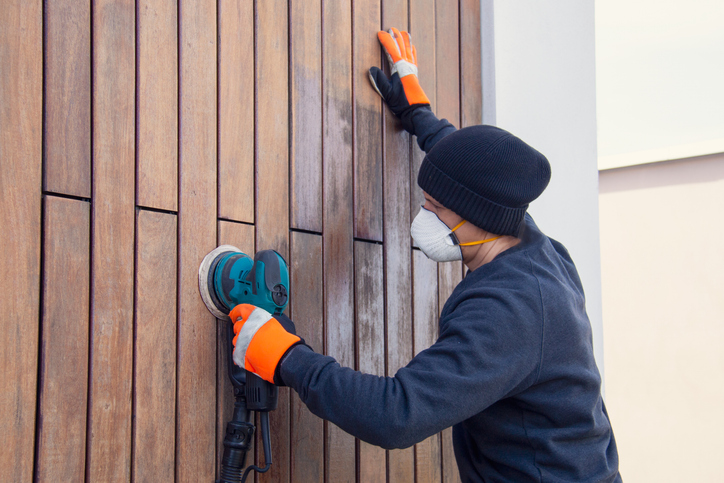
Mighty oaks from little acorns grow—we all learned a version of the aphorism in grammar school. From the longevity of the timbers in the original roof of Notre-Dame de Paris cathedral to the eye-catching hardwood floors in the best-built houses, there is a lot to appreciate about oak.
But oak is not the only kind of wood to get attention. People voice unique preferences when choosing wood, especially when choosing wood species that will be part of a prominent feature in a home, such as a deck.
Contractors must not only determine the best way to restore a wood feature, but they must also be attentive to the sensibilities of the feature’s owner. A prospective customer seeking a wood restorer may not want to hear they made a bad choice in wood species.
And some prospective customers may have made their initial selection based on cost. Reminding them about what they could not afford is a bad idea, too.
What’s interesting, though, is that less expensive wood species may be easier to restore. Pine, which is a softwood species, can be beautifully restored, even when it’s 125 years old—something this writer knows from experience with floors.
As for identifying species of wood that are easier to restore than others, like everything else, context matters. “This depends on the restoration process,” says Joseph Daniel, CEO of ITD Chemical in Tucker, GA.
“Softer types of wood, such as pine, can be easier to restore given the ease of penetrating the surface,” explains Daniel. “However, these types also rot more easily, and softwood that has been allowed to rot all the way through cannot easily be restored.”
But the converse is also true. “Harder wood types, such as oak, can be harder to restore given the difficulty of penetrating the surface,” says Daniel. “However, these wood types also rot more slowly, and thus there is a higher likelihood of restoration in older hardwood.”
Property owners restore wood because they want to showcase its beauty. (We all know the many laminates that substitute or overlay wood floors. Can they compete in beauty with refurbished oak floors? Some of us are a definite “no,” but each consumer sees things differently.)
“Most people are restoring wood because it is difficult to replace or because it saves them money,” says Daniel. “Wood restoration is a chemical process, first and foremost. Choosing the right chemical will make the process easier and the outcome more favorable.”
What about contractors in our industry? Should they consider adding wood restoration to their repertoire? If they offer deck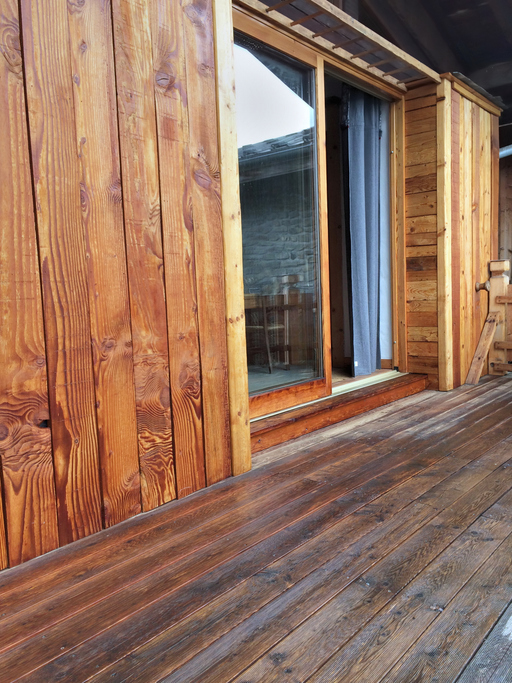 cleaning services, the rehabilitation of the wood in decks makes a logical addition.
“There are a lot of companies that specialize in wood restoration, and it can be very profitable, especially if you can get the client to sign up for a maintenance plan to maintain the deck on a regular basis,” says Henry Bockman, president of PowerWashCompany.com in Germantown, MD. But just leaping in and adding the service is not the way to go.
“There are several essential steps for wood restoration,” says Bockman. “But the most important is to learn how to restore wood correctly—and practice—before attempting to do it on someone else’s property.”
The learning component should include several subparts, explains Bockman. “Always learn how to identify the types of lumber. And determine to use the best cleaning solutions and the least amount of pressure to clean it.”
With the hands-on training a contractor undertakes prior to offering wood restoration to customers, he or she becomes familiar with the steps that ensure good results. For instance, after the wash, which is the first thing to do?
“It’s to neutralize the lumber and use a penetrating oil-based stain that remoisturizes the lumber and protects it from UV rays,” says Bockman. “My personal favorite is Ready Seal because it’s very user friendly and the coloring doesn’t scrape off when the deck furniture is slid around.”
Is one type of wood easier to restore? Yes, says Bockman. “Pine is the easiest because it’s a medium density softwood and resistant to sanding, deck strippers, and most cleaning solutions. It also accepts penetrating oil-based stains like the one I mentioned fairly easily.”
And what would Bockman put in the difficult species category? “Most hardwoods like ipe can be very difficult to restore, especially purple heart wood because it can be difficult to get cleaning solutions to remove all the soil. It’s also more difficult to seal because of its density.” The density means sealers take longer to penetrate.
Confident, Competent
DIY homeowners may experience trepidation when considering a deck-restoration project. Rightly so, given they do not have the depth or breadth of knowledge of a professional restorer.
Members of our industry who offer restoration services take a much more matter-of-fact approach. It’s an outlook borne of confidence.
“I think all species of wood are easy to restore,” says Mike Hilborn, president of RTD Services in Saint Paul, MN. “It’s not the wood that is the problem when it comes to restoration; it is the product that was applied the last time.”
Hilborn has a very definite perspective. “All water-based products are absolutely terrible when it comes to restoring wood,” he says. “Oil is best. You can strip oil-based products. You are unable to strip water-based products.”
What it all means is that the biggest challenge—or difficulty—in restoring wood “is based on what was used last time,” says Hilborn. “The most important aspect of restoring wood is knowing what you are going to have to remove. Oil is easy and effective.”
What makes water-based products troublesome? “Water-based products are nearly impossible to remove,” says Hilborn. “Floors with water-based products must be sanded.”
The sanding adds to the cost. “It is way more expensive than chemically removing the old product,” says Hilborn.
Then there’s the logistics of sanding. “It’s nearly impossible to sand vertical surfaces like support posts and spindles,” says Hilborn. He adds it is cheaper to replace them.
Natural fiber—is there anything that competes with the aesthetics of wood? To some of us, the answer is no.
“Wood is the ultimate green product,” says Hilborn. “Composites are made with petroleum products. Nothing is more beautiful than wood. No one likes plastic furniture inside their house—the same applies to a wood deck or fence. There is nothing prettier or more environmentally friendly.”
Let’s focus a bit on the “environmentally friendly” dimension. It matters.
“The sustainability aspect of wood restoration really should be a key selling point,” says Russell Cissell, founder of Woodrich Brand by Extreme Solutions Inc. in Portage Des Sioux, MO. Construction and demolition waste add up to 600 million tons every year in the US according to the EPA.”
Restoring wood not only keeps materials out of landfills, but it also reduces the need for new lumber, says Cissell. Very important, given the most in-demand tree species can take decades to grow to harvesting height.
There’s also a correlated benefit. “The energy and emissions tied to producing and transporting new wood products are avoided when you restore instead of replace,” explains Cissell.
The message of environmental harmony can be used in marketing and sales, says Cissell. “Use direct, impactful language like ‘Restoring this deck saves around 1000 pounds of waste from the landfill,’ or, ‘By restoring, you’re conserving natural resources and cutting down on waste.’”
Because “customers want to make responsible choices,” says Cissell, a contractor should “show them how restoration protects the environment and their wallets.”
Good outcomes will speak to neighbors and passersby. So get it right.
“The first step in any successful wood restoration job is surface preparation,” says Cissell. “Start with a thorough assessment to determine what the wood needs—cleaning, stripping, or brightening.
“Use a system that delivers consistent, predictable results,” continues Cissell. “When you prep the surface correctly, stains penetrate better, finishes last longer, and callbacks drop.”
As much love as there is for wood by those who restore it, a good outcome must encompass more than a beautiful result. “Success isn’t just about a great-looking finish, it’s about turning a profit,” says Cissell. “Efficient systems save time and materials, boosting your bottom line while delivering results your customers will rave about.”
Learn and then do with confidence. “The species of wood isn’t usually as big a concern as the type of finish that’s been applied,” says Cissell. “Most existing finishes will melt off like butter; however some types, particularly the water reducible alkyd finishes, can be more stubborn.”
Species vary. Still, the basic steps apply irrespective of type of wood, explains Cissell.
“The trickiest species I’ve come across has been Siberian larch,” says Cissell. “It can carry a fungus deep inside that presents as grey speckles that can appear after an otherwise good cleaning.”
Toward the other easiest end of the spectrum put weathered cedar, which has turned black due to weathering and UV exposure, says Cissell. “The transformation to fresh-cut appearance always draws admiration and praise from the customer. It feels almost as good as getting paid.”

Current Digital Issue
|
|
Click to read.
|


Go Mobile