Transparency in Supply Chains
By Diane M. Calabrese / Published April 2017
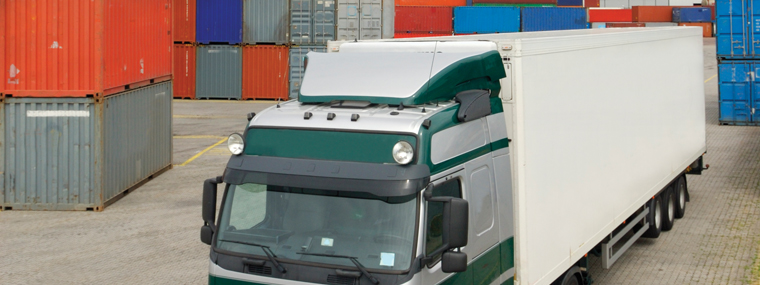
Distance and time are enemies of transparency. To truly know what’s happening, one must be present and observant. Despite the difficulty added by a spatial or temporal separation from a source of raw material or a vendor, a transparent supply chain is a must. Why? In the most comprehensive answer, it reduces the risk to a business.
Although it’s somewhat artificial, we can break the risk into three parts (with considerable overlap): economic, environmental, and ethical.
The economic risk to a business regarding a tainted or substandard raw material or component is obvious. If the final product incorporates anything less than the best, it too will be less than the best.
Environmental risk derives from the cradle-to-grave responsibility that manufacturers, in particular, now have for products. Suppose a manufacturer unknowingly incorporates a component that has lead in it, but the presence of lead is not disclosed to the manufacturer. Years later, when the lead is found in cleaning equipment used in elementary schools, there could be a big problem for the manufacturer.
Ethical risk stems from the expectation that a company does not violate the rights of fellow humans to make its product. In the United States, vigorous labor laws and genuine good will toward all protect the labor force. Yet in some nations, human rights are imperiled. Although most business owners would not intentionally exploit people to make a product, the owner cannot be 100 percent certain that all distant contributors to the supply chain adhere to the same ethical norm.
An environmental problem that brings a fine from the Environmental Protection Agency (EPA) becomes an economic liability, too. An ethical lapse—irrespective of how unintended—also becomes an economic risk when publicity about the lead, for example, reduces confidence in a business.
A company can test the components and raw materials it receives to verify they meet standards, but what can a company do to verify that the individuals contributing to a supply chain were treated with dignity and fairly compensated for their work? The state of California, which often establishes the start of a regulatory trend, has enacted legislation to address the issue.
California Transparency In Supply Chains Act
The California Transparency in Supply Chains Act took effect in January 2012. It was signed into law in October 2010. (The U.S. Department of Labor, www.dol.gov, provides access to the complete text of the law, as well as a compilation of best practices in responding and guidance for implementation.)
The California law has a goal of eradicating slavery and human trafficking in supply chains. It affects large retailers and manufacturing companies (annual revenues of $100 million or more) and includes reporting requirements. Reports are available to consumers, providing a mechanism for applying pressure on these companies.
Companies that meet the size threshold and are headquartered in or do business in the Golden State are subject to the law. Such companies must disclose on their websites their initiatives to eradicate slavery and human trafficking from their direct supply chain for the goods offered for sale.
Disclosures must address the verification (extent of), audits (extent of), certification (kinds of), accountability standards for employees and contractors (kinds of), and training for employees and managers (extent of). Audits are to encompass suppliers, which means manufacturers and distributors in our industry should be prepared to comply with additional reporting requirements in order to serve large buyers. Some members of our industry have no doubt already fulfilled such reporting requirements.
As for companies that must publish disclosure statements on their websites, there is assistance available. Boilerplate text is available from government sources and from legal consultancies, so a company need not work without a framework.
Real-World Complexity
U.S. companies bear a cost for complying with regulations, yet they comply and meet the expense as part of doing business and because it’s the right thing to do. Complexity develops in the real world, though. To illustrate, let’s choose an example from outside the industry.
Take organically grown vegetables. Any vegetable gardener who has ever stood and looked in awe at the global array of produce labeled organic at a Whole Foods or similar grocery store has one question: How can such unblemished fruit and vegetables be grown without pesticides and rodenticides? (It defies the common sense of a gardener.)
To attain the organically grown label, U.S. farmers meet stringent certification requirements. Some of them have begun to wonder whether they are doing what others are not. A page B1 story in the February 22, 2017, edition of The Wall Street Journal details competition U.S. organic grain farmers have from organic farms in Turkey, Ukraine, Argentina, Romania, and India. Although fraud in organic certificates issued in Turkey was documented, U.S. Department of Agriculture (USDA) officials downplayed it.
Therein is the complexity. How is a business playing by the rules to compete with a business that is not? It’s a real-world complexity that members of our industry know well.
Counterfeit certificates and fraudulent certifications are a problem that the federal government recognizes. It’s the response that’s sometimes weak.
For example, the National Defense Authorization Act of 2012 included provisions that require government contractors to do more to prevent counterfeit electronic parts from entering federal supply chains. A rule that took effect in May 2014 applies to contractors subject to Cost Accounting Standards. (In other words, most small businesses are subject to the rule only if they serve as subcontractors to larger firms.)
Companies are required to develop procedures to identify counterfeit parts—and trace them, weed them out, and report them. We can add a fourth element—electronic—to our three risks because should a contractor supply a counterfeit or suspected counterfeit part to the federal government, the contractor will be liable for the cost of replacement and reworking.
All parts of supply chains are scrutinized in one way or another by regulators. Anticipating a carbon tax, the EPA launched SmartWay, a public-private partnership, 13 years ago. The goal of the program is to make transportation supply chains more energy efficient. Participating companies use benchmarking to improve logistics and ultimately cut carbon emissions.
Involvement in a program such as SmartWay can give a company access to useful information that strengthens it. Perhaps unit loads could be consolidated in ways that make shipping more economical. Generally, cutting emissions in transportation does coincide with cutting costs.
That brings us back to the economic reasons for transparency in a supply chain. Each time a manufacturer evaluates new suppliers, the manufacturer undertakes an exercise in transparency. Buying raw materials or components on the basis of cost alone is never an option.
Bright Ideas
Shine light on a supply chain periodically. The chain should stand up to intense illumination as well as it does when ignored because it moves so well.
For manufacturers and distributors who want to take a closer look at their supply chain, there are some excellent ideas in two papers, one from Deloitte Consulting LLP and the other published in the Harvard Business Review (HBR). We will give a short overview of each one.
David Linich in “The Path to Supply Chain Transparency” (Deloitte, dupress.deloitte.com/dup-us-en/topics/operations/supply-chain-transparency.html) offers a good exercise in scoring and ranking risks that can be adapted to any company’s interests. (The exercise comes from a Deloitte database.) By identifying which links in a supply chain pose the greatest vulnerability (most likely to happen) and are most severe in consequences if they do happen, a business gains a rank-ordering of what to address first.
Steve New in “The Transparent Supply Chain” (HBR, hbr.org/2010/10/the-transparent-supply-chain) outlines some of the technologies that improve transparency. Among them are radio-frequency identification tags, which in conjunction with bar coding are great tools that have been deployed in our industry and others (wood products from grade lumber to pallets) for many years.
An interesting dimension of transparency in supply chains is that the quest to achieve it extends to all activity sectors. Take the sponges that soak up blood during a surgery. Getting every one of them out at the conclusion of an operation is not always easy. RFID tags on sponges is one of the methods being tried to make sure what goes in also comes out.
Whether for economic, environmental, or ethical reasons—and most probably it’s for all three—transparency in the supply chain concerns manufacturers and distributors. And it concerns contractors who should only be purchasing equipment and products from legitimate sellers. Doing so protects the contractor because improperly graded or mixed chemicals and faulty equipment constitute a danger and a liability.
Many customers, even commercial customers, ask thoughtful questions about how and where a product was made. Such curiosity has led to an interesting result. Many would-be buyers choose products made in the United States and products sourced in the United States because they know that the labor, environmental, and other laws on the books have actually been enforced. Over the long term, then, transparency in supply chains might lead to better business practices all over the world.
Current Digital Issue
|
|
Click to read.
|

Go Mobile