

Current Digital Issue
|
|
Click to read.
|


The Law Advisor: Corporate Community Involvement: Potential Legal Risks
By Michael B. Berger, Esq. / Published December 2014
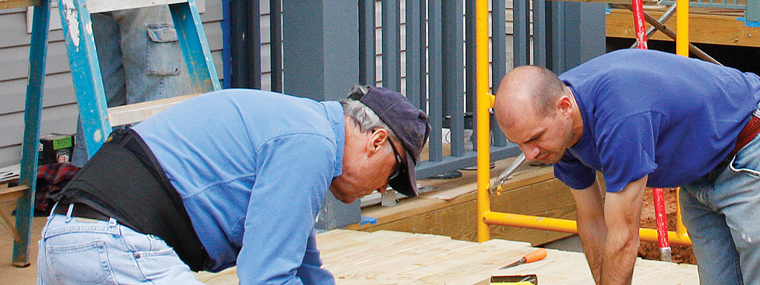
Many businesses strive to give back to their communities and encourage their employees to do so as well. Businesses do so for a variety of reasons, which include: 1) the charitable and philanthropic beliefs of the owners; 2) to build employee morale and loyalty; and 3) to raise awareness of the company brand and to provide positive publicity. Studies have shown that companies that “give back” to their community: 1) outperform their competitors financially in the long run; and 2) have happier and more productive employees. Simply put, community involvement is “good business.”
Potential Pitfalls—A Hypothetical Scenario
Unfortunately, our society has become very litigious. Therefore, even when trying to do something positive for its community, businesses must be cognizant of the potential legal risks. The expression “no good deed goes unpunished” comes to mind.
I will illustrate the concern by discussing a hypothetical situation. Assume XYZ Construction has agreed to participate in a local Habitat for Humanity event, in which volunteers and volunteer organizations will help build a home for a disadvantaged family. XYZ Construction has offered to provide three “volunteer” employees to work eight hours on the Saturday of the planned construction. XYZ Construction has also offered to donate $2,000 worth of plywood to be used in the construction of the home.
While working on the construction of the home, Mike Jones, one of the XYZ volunteers and a carpenter for the company, was injured when he tripped over a piece of metal left on the floor by another volunteer. Jones broke his wrist while trying to break his fall. He incurred $5,000 in medical expenses and also missed three weeks of work.
To make matters worse, the plywood donated by XYZ turned out to be defective and eventually rotted and needed to be replaced. The rotting plywood turned to mold, and other parts of the house were damaged and the residents had to be relocated for two weeks while the damage was repaired. The total cost to replace the damaged plywood, make all of the necessary repairs, and relocate the residents was $10,000.
Who Compensates Mr. Jones?
Jones filed a claim with XYZ’s workmen’s compensation insurance company. Whether or not Jones’s claim would be successful would depend in large part on whether or not he was acting within the course and scope of his employment while “volunteering.” The answer to this question is not necessarily clear and could vary depending on the law of the state where XYZ operates. If Jones’s claim is declined, then XYZ would have a moral, if not a legal obligation, to cover Jones’s uninsured medical expenses and to pay him for the time he misses work due to his injury.
Is XYZ Responsible for the Damages Caused by the Rotten Plywood?
A substantive discussion on the law of product liability and a contractor’s liability for “construction defects” is beyond the scope of this article. However, it is safe to assume that if litigation ensued regarding the rotten plywood and the resulting damages, that XYZ would be held liable since it supplied the plywood for the project. The result would not change merely because the plywood had been donated.
Recommendations and Conclusion
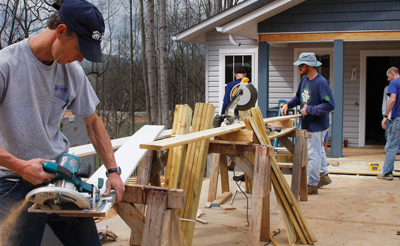 As illustrated by the hypothetical, “stuff happens,” even when things are done with the best of intentions. What should a business do to protect itself when engaging in community projects? Some might say it is best to avoid any project with any potential legal risks. I do not agree, but businesses must use good common sense. Before committing to participating in a specific project, especially one that might involve a fair amount of risk such as the construction of a donated home, the company should consult with its insurance agent. The company should ensure: 1) that its volunteer employees will be covered by workmen’s compensation should they be injured; and 2) that the company’s general liability or errors and omission insurance policy will cover the company in the event there is a defect in any donated products or if any of the work performed by one of the company’s volunteers is defective.
If your business has other concerns with respect to its community involvement programs, then you should consult with your legal counsel.
Michael Berger, Esq., is a Partner with Carpenter & Berger, PL. For more information, call (954) 772-0127, e-mail mberger@carpenterberger.com, or visit www.carpenterberger.com.
Disclaimer: The information provided in the Law Advisor column should not be considered legal advice. This column is intended only to provide general educational information. You must never rely on the information provided here as legal advice. Only your attorney can evaluate your specific situation and provide you with legal advice. Except as provided below, you may feel free to forward, distribute, and copy the Law Advisor column, as long as you forward, distribute, and copy it without any changes and include all headers and other identifying information. You may not copy it to a website without the author’s prior written consent.
Go Mobile