 |
Small Business Documents
Protecting and Running Your Business, Part II
By Beth Borrego / Published July 2022

Editor’s Note: Part I in this series, Small Business Documents: Protecting and Running Your Business, was published in the June issue of CT. To read Part I in its entirety, please visit www.cleanertimes.com.
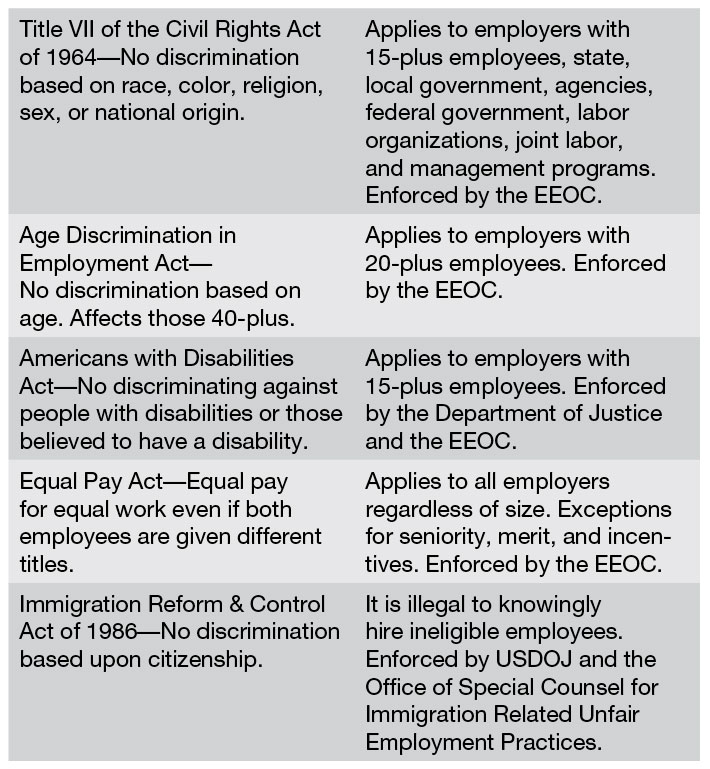 In addition to the documents and receipts already mentioned, there are a variety of internal documents that are also important to implement. These documents provide internal structure and aid in the documentation of daily events while giving the business structure and order. Policies and procedures are important and provide boundaries and direction to employees. However, before you begin drafting documents, it’s worth mentioning that there are laws that you must abide by. It’s important to familiarize yourself with them and to understand their impact on your business because these laws are designed to protect the rights of the people.
Before you hire anyone, you’ll no doubt be interviewing the individual. Currently, job interviews look different than before COVID-19. Many employers are conducting interviews via Zoom to avoid contact. This is a safe way to meet a potential new hire face to face and to have a meaningful discussion without any risk to you or your current staff. According to Forbes, many employers are asking questions that have typically been off limits in order to gauge the impact on their business should something like remote learning remain in effect for an extended period of time. According to Forbes, one of the most prevalent questions appears to be, “How many kids do you have and what are their ages?” The concern is that the new hire might have to stay home and fulfill the role of assisting with remote education instead. Before we go further, it is important to note that legal practices are still best and carefully but legally worded questions will yield you the best results.
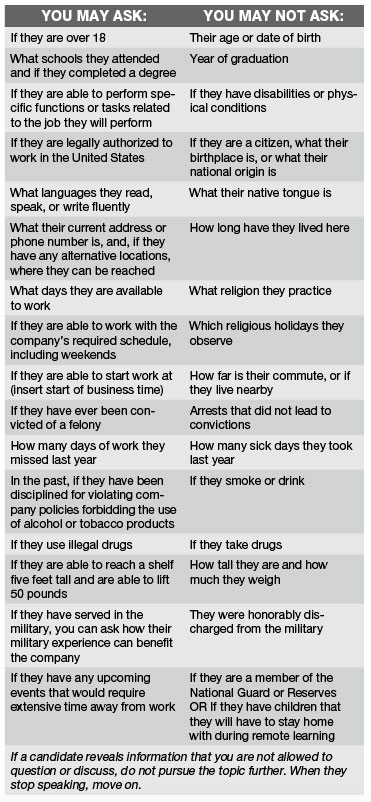 An employment application is an important document and should be used for all applicants, although some may have resumes. Make certain your application does not request anything that you may be prohibited from asking, and make certain you are aware of what you can and cannot ask of any applicant. Check with your state for specifics, but following are some of the questions that you may and may not ask applicants:
Let all applicants know how long the application will be active and on file. Inform them that all hiring decisions are based upon the current information provided on the application, and that if that information changes, they would need to submit a new application reflecting any updated changes. This may include information such as their contact information or employment history, for example. It’s helpful to obtain and check references from former employers. In contrast, it’s not typically a good idea to contact friends or family members for references, since they would be biased and not knowledgeable of the applicant’s work history or capabilities on the job. Make sure that your application has a statement making it clear that falsifying the application is considered grounds for termination. It’s appropriate to have the applicant sign and date the application; it’s also considered due diligence to contact references, perform background checks, and require drug testing as a part of the company’s hiring process.

Once you have successfully hired the desired candidate, you’ll want to present them with various documents to read and sign. Due to COVID-19 you might consider emailing PDF copies to them to read digitally. They can print the signature page, sign it, and return it to you. This is also a more environmentally friendly way of delivering the documents to them, and that is always a positive thing.

Photo by iStockphoto.com/Kubkoo
These documents should become a part of their personnel file. When an offer is extended to the successful applicant, it’s important to let them know what kinds of documents they will need to fill out, in case they have an objection. Two common but necessary documents that aid in protecting your company are the non-disclosure and the non-compete agreement. A non-disclosure agreement basically means that what is shared or discussed must remain confidential and may not be discussed outside of the workplace. It’s also known as a confidentiality agreement. The other document is the non-compete, which basically protects your company from those who would choose to work for you short-term with the interest of leaving and starting up a competing business. It’s important to note that some courts take a dim view of these agreements, and the wording of them should be very specific. For this reason, it’s wise to spend the money and have an attorney specializing in that area of the law draw one up for you.
Current Digital Issue
|
|
Click to read.
|

Past Digital Issues
|
|
Click to read.
|

Go Mobile