

Proper Equipment – Prepared And Ready
by Diane M. Calabrese | Published March 2026
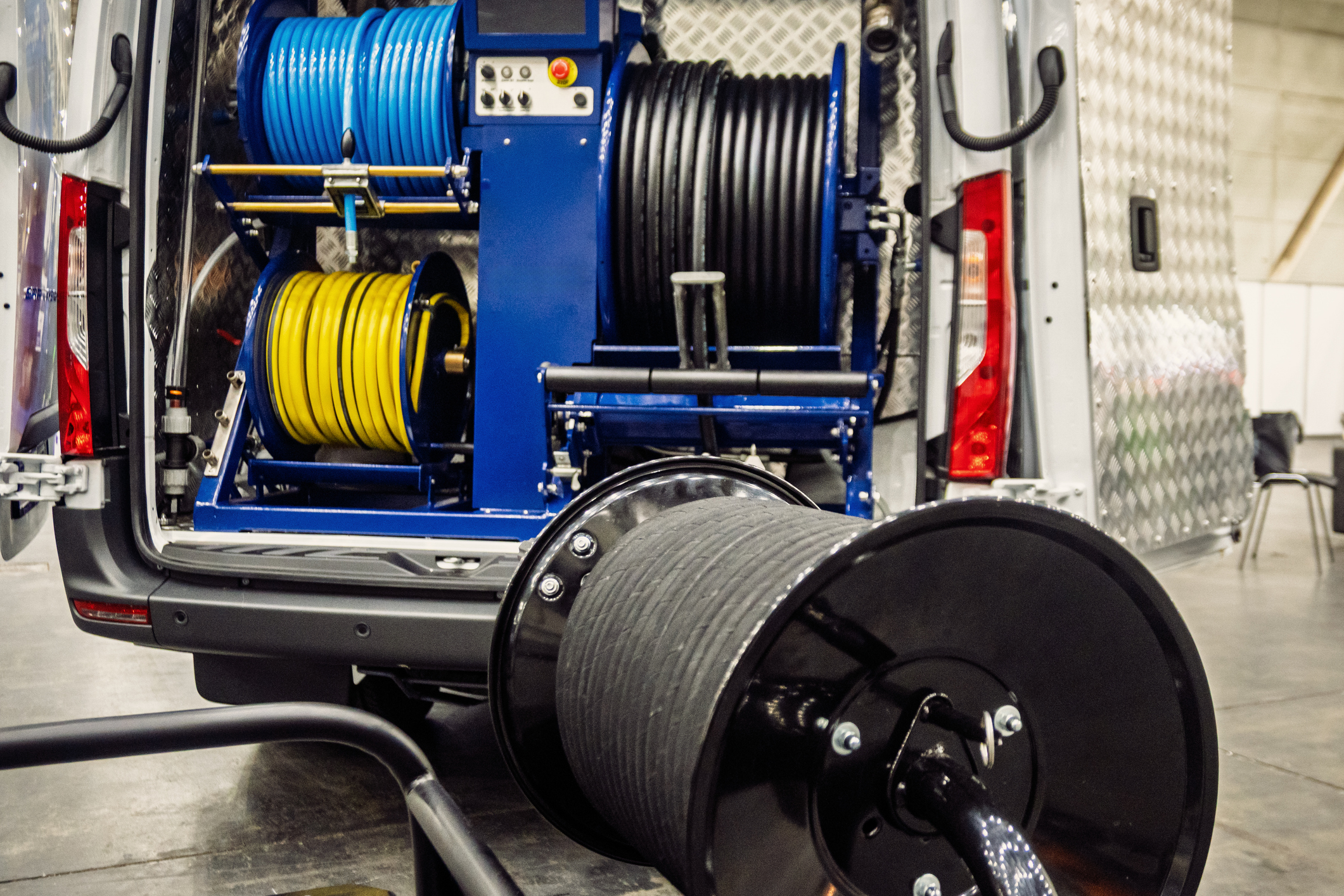
Are you tired, hungry, or just eager to get a shower when the day ends? All the foregoing are oft-used ways to rationalize not taking the final step: a check on readiness. Equipment must be prepared and ready for its next outing. Of course, it must first and foremost be the proper equipment.
Giving equipment the attention it requires at the end of each day begins with the basics. And Shane Blomendahl in technical, agricultural, and industrial sales at Dultmeier Sales in Omaha, NE, runs through them.
Blomendahl says there are three important things a contractor should do at the end of each day. “Flush chemical lines. Check all oil levels. Make sure 12-volt systems have a fully charged battery.”
In his experience Blomendahl has seen some types of equipment neglected more often than other types. “Hand-held sprayers and chemical applicators are among them,” he notes.
Relying on the recommendations of the distributor from which equipment was purchased is invaluable. In doing so, explains Blomendahl, contractors tap into “a large range of technical experience,” such as that his company offers.
Back up to the point of buying equipment. Be prudent and make certain the distributor services every brand of equipment it offers, says Blomendahl.
Thinking of the distributor as a partner is a good way for contractors to build a roster of proper equipment. Suitable equipment in place, they next need to know how to keep it prepared and ready for immediate use.
A veteran contractor in our industry, Henry Bockman, the president of PowerWashCompany.com in Germantown MD, tells us something about the protocols he expects his team to follow. Protocols are a good template for others.
“When my crews are done working for the day,” says Bockman, the readiness protocols take over. “We have them fill a checklist at the end of the day stating that they have filled up the equipment with fuel, flushed out all equipment with freshwater, including the 12 V pumps and soft wash equipment and down streamers, which should also be neutralized with a cleaning solution.”
And the checklist continues. The crews are to “note any issues they had during the day,” explains Bockman. “Then they restock the trucks with any cleaning solutions they used and verify that all equipment and tools are returned to their proper place.”
The list at Bockman’s company gets a bit longer for the crews in one season. “They are also required to winterize the equipment in the winter and empty water tanks.”
Anyone who works with equipment day in and out knows which sorts are most likely to be neglected. It’s usually a benign neglect, borne of taking the equipment for granted because it is so reliable.
But don’t be neglectful is the recommendation of contractors and distributors alike. Give every piece of equipment on the roster its due.
“Often neglected is soft washing equipment like 12 V pumps or gas-powered roof equipment and down streamers,” says Bockman. “They should be rinsed out after each job and definitely at the end of the day. Contractors should run a sodium hypochlorite neutralizing solution through them.”
From the contractor side, Bockman also cites the significance of a strong interaction with a distributor. “Distributors should always go over the basic requirements for maintenance on any equipment they sell so their clients are satisfied with how the equipment operates and how long it lasts.”
The longevity of equipment matters to the bottom line. As Bockman highlights it, he in effect reminds us that proper care of equipment guarantees both readiness and full lifespan of equipment.
“Distributors should also explain that pumps are water cooled, so contractors don’t let them run unused for more than a few minutes,” explains Bockman. “That’s because doing so can cause seals and other internal components on the pumps to fail early.”
Readiness extends to having the confidence that when a part is required or service from a technician needed, they can be had. Again, the distributor enters the picture.
“I’m not sure what most distributors do, but my supplier, Sun Brite Supply in Maryland, has spare parts for all the equipment they sell and for all the other brands, so they can turn around equipment service quickly when it needs to be repaired,” says Bockman. “They have all types of rental equipment as well.”
Own It or Not
The introduction of rental equipment brings us to the perspective of a distributor who observes that owners and renters of equipment often treat machines differently. (The car rental industry would concur, and it does everything possible to encourage renters to treat equipment well. Some rental agencies now take photos of vehicles before they leave the lot.)
The topic of contractors keeping equipment prepared and ready “hinges on two descriptions,” says Roy Pennington, owner of Hi Pressure Cleaning Systems Inc. in Houma, LA. “Those small contractors who own and operate equipment on a daily basis are more inclined to do some preventative maintenance and keep their units ready to go.”
The commitment of the small contractor “can be as simple as checking the oil on a regular basis, and/or flushing their soft wash system from the corrosive sodium hypochlorite at end of the workday,” explains Pennington. “Seems like those who pay the bills themselves are more prone to keeping it running and working.”
On the other end of the spectrum from the small owner or owner operator is the large company. “The large ‘employees-using-the-equipment’ companies are less interested in maintaining the equipment,” says Pennington.
“The owners are interested, but the end users look at equipment and think, ‘If this machine doesn’t work tomorrow, neither do I, ’” explains Pennington.
“Case in point—a customer who has a fleet of restaurant hood cleaning trucks, brought a unit in from an 80-mile roundtrip because it would not start.” And why wouldn’t it start? “We added eight ounces of oil to the engine that holds 40 ounces and problem solved,” says Pennington.
“We find diesel tanks being filled at various service stations on the route, growing ‘biological critter masses’ that plug up the burner intake,” says Pennington. How does such a scenario unfold?
Contractors with the critter and biomass issues tell Pennington how it happened when he queries them. They say, “’No, we don’t put biocide in the diesel tank; we fill up at good gas stations.’”
As for which is the most neglected piece of equipment on which contractors rely, Pennington says there’s a very definite answer. “The pressure washer.”
That may surprise users, but Pennington’s conclusion is persuasive. “Amazing that the one piece of equipment used to clean everything else is the most neglected and dirtiest piece in the shop,” he says.
So dirty, in fact, that Pennigton’s company has a regimen it follows to counter the problem. “Our SOP [standard operating procedure] is to give every incoming piece a bath with hot water before doing anything to troubleshoot it.”
Distributors play a part in encouraging contractors to keep equipment in top working order. “We play a role, especially when they say, ‘Wowser,’ when looking at a bill where routine maintenance and care would have negated the work,” says Pennington.
Getting a machine buyer on a strong footing serves the buyer and the seller. “We try,” says Pennington. “It is our policy that every outgoing rental unit or repaired unit is run and demonstrated for the customer prior to going out on rent or being returned to the customer.”
Moreover, there are some recommendations along with the demonstration. “We stress stabilizer and biocide for diesel as great preventative medication,” says Pennington.
Lamentably, says Pennington, not all machine users will adhere to the simplest recommendations for keeping equipment in optimal condition. Therefore, until the “all” decide they should give each piece of equipment the attention it deserves, there will be problems.
Disposability Preempts Care
None of our experts spoke to an issue that may also account for some of the lack of necessary interaction with equipment. It’s an observation by this writer that comes from experience in an urban area where some homeowners hire unlicensed individuals to wash exteriors and decks.
Even many of the licensed contractors eschew professional organizations and certifications, and some of the smaller pressure washers are treated as more-or-less disposable. It’s not uncommon to see small pressure washers at the curbside waiting for a trash pickup.
The oddity in a world committed to green technologies is how little attention disposal gets. Less disposal of machines and building materials is as good a way to contribute to the health of the environment as conserving water and energy.
With so many aphorisms and proverbs that speak to doing more with less—a stitch in time saves nine—it often seems not many people are paying attention.
It’s a big picture way of looking at the world. It is also one that reminds us of our parents’ admonishments to hang up our coat, put toys away, and treat bicycles well, etc.
If we had the temerity to ask why, parents had a ready answer: So that they will last a long time.

Current Digital Issue
|
|
Click to read.
|


Go Mobile