Current Digital Issue
|
|
Click to read.
|

Power Washer’s Guidebook: Proper Cleaning Procedures for Trains and Mass Transit
Contributor: John Muller, Owner, Mobile Wash & Steam Cleaning Company, Glenwillard, PA / Published December 2014
Editor’s Note: This is a new chapter in the revision of the 2002 Power Washer’s Guidebook.
Geographical Considerations
Location can limit opportunities. Being near a rail or mass transit hub is important. Smaller municipalities with small hubs may have more of a need for contractors because large facilities do the work in-house.
Typical Job
We are located 10 minutes away from a major rail hub, and I went there many times when I first started my business, more than 30 years ago. Even though we have worked for this facility, never has it been for what I would have tried to accomplish—washing locomotives and railcars.
We have washed more locomotives and railcars away from our hometown—50 miles or more away—than near our facility. Larger facilities seem to do most of this type of work. Yet much of this work is done in house and only rarely contracted out.
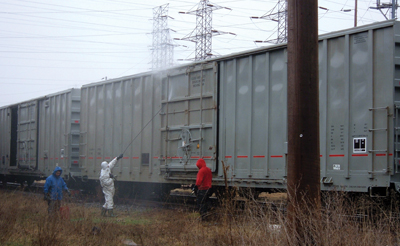
Since cleaning of trains, subways, and mass transit cars is usually done in-house, it is a market we just don’t go after. We will sometimes get called in for an unusual situation, such as the in-house cleaning process/system has broken down and repairs to fix it will take time. So we will get the call to fill in as required until repairs to the in-house wash system are made.
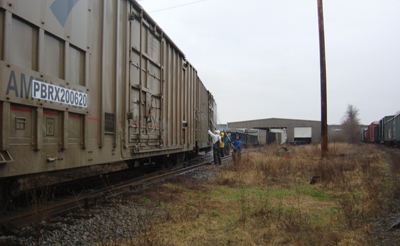
The environmental requirements make it very difficult to wash rail and transit cars wherever they sit. The cars usually have to be cleaned where the wash water can be collected, such as moving the unit to a wash bay.
The cleaning can be done with a mobile approach and we have done it, making our own system to collect the wash water. But it can be very time-consuming setting up the system. Then you have to wash the unit that needs cleaning.
Some prospective customers say that they need the locomotive and a few specialty cars done right away. For such customers to move a unit or units to a wash bay quickly—remember trains are limited to the tracks they move on, and it’s a big deal to go from here to there—is not generally possible. It can take days or even weeks to get into a wash bay.
Techniques that Work Best
Once it’s determined what you are going to clean and where, then the contractor has to determine how to do it. We have found the locomotive will be the biggest challenge. It has all the motors, which creates heat and always seems to have oil leaks; carries all the fuel, which seems to have always spilled during the filling; and blows out all the exhaust, which goes everywhere.
Also, the locomotive will be shaped differently than the other units, making it a little more difficult and more time consuming. It will also require more cleaners/degreasers.
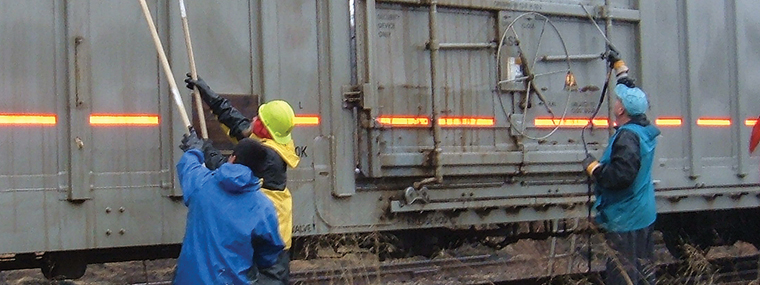
 For us, cleaning a locomotive will be done by giving it a good hot water rinsing first. This will remove most of the oil, mud, and dirt before applying the cleaners. It does not make any sense to spray on a cleaner when the dirt is two inches thick. Most cleaners are referred to as surface cleaners, and they will not work if they cannot get to the surface.
Once we have removed as much material as possible, we apply the cleaners/degreasers and give the surface a good scrubbing. There is no other way to break the bond most materials have made to the surface than to scrub it. Good soaps will remove most of it, and I have heard every salesman on the planet claim they have the best. No doubt some are better than others, but the most important cleaning tool I have ever found is the brush (see Equipment and Supplies section).
Exceptions
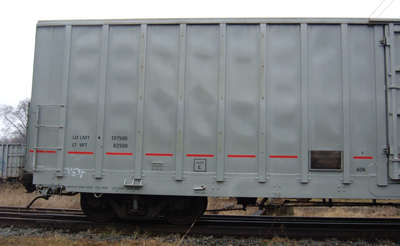
Subways and mass transit cars are most likely to be electric powered. They will not be nearly as dirty as diesel-powered units. Their box-like shape makes cleaning fast and easy. The surface is probably close to 30 percent windows.
Because of their shape and ease of cleaning, subway and mass transit cars are routinely cleaned with drive through wash systems. The wash systems are owned by most large towns and cities with mass transit.
Equipment and Supplies
 Each of our trucks carries a variety of brushes from the size of a toothbrush to four-ft. wide. Customer demands will determine which brush and cleaners to use.
A hot water pressure washer, personal protective equipment (PPE)—and if working inside hopper cars, all safety equipment for working in confined spaces—cleaners/degreasers, and a wastewater collection system (or a designated wash bay to carry out the work) are on the essential equipment list.
How to Bill
For emergency work—like filling in when an in-house cleaning system is offline—a contractor may be able to negotiate a price. If that’s the case, take into account the type of car and the type of material (just dirt or oil and grease residue) to be removed. Responding to an RFP for cleaning at a facility on a regular basis should be done only with a clear understanding of the scope of the work and expectations; talk to the operations manager or other appropriate people at the facility.
Ancillaries
Use a call to fill in at a facility that has its in-house system offline as an opportunity to quickly survey the asphalt and concrete pavement and building exteriors. Determine whether there is the possibility of providing services for surface cleaning.
Problem Areas to Avoid
Be prepared to collect all wastewater. Use all required PPE and obtain all required certifications (e.g., if working inside rail cars, or in confined spaces). Understand special safety issues. (See Sidebar below)
Safety Emphasized
Contributed by Jay Rissler, Owner and Founder, FullBlast Pressure Washing, Peasant Hall, PA
We have cleaned the inside of railcars—typically tanker or hopper rail cars for change of service or other reasons. This can be a hazardous job if not done in the proper manner, as you are working in a confined space and must be trained and certified for this requirement.
Safety comes first. Washing the car can have its challenges, such as opening a hopper car and finding it to be one-quarter full of product because it came in wet and bridged. This can be a lot of product to take care of.
Two pieces of equipment that are musts when washing inside a confined space area are a winch, in case of an accident, and also an air monitor to ensure the oxygen level is fine for an attendant to enter. And, as a corollary to safety, all wash water must be reclaimed and disposed of properly, which can be expensive.
From small homes to train car cleaning, Jay Rissler has enjoyed helping thousands of people meet cleaning needs. He thanks the Lord, who blessed him with many things, for bringing him to where he is today from a humble startup in 2001.
How to Fix Mistakes
Have a full understanding of residue on or in cars, and the components (electric, diesel) of cars before beginning a job. Reach an agreement with the equipment owner/operations manager about what the outcome should be before the project begins. Be prepared to clean any surfaces missed.
John Muller is the owner of Mobile Wash & Steam Cleaning Company in Glenwillard, PA. He was introduced to high pressure/hot water/steam cleaning in the early 1980s and launched his company in 1986. He makes his own brand of cleaners. His business philosophy is to clean it like you own it—and you will always have a satisfied customer.
Go Mobile