
Digital Tools and Online Banking
by Diane M. Calabrese | Published February 2026
Lucky for Voyager 1 that it transmits most information back to Earth via X-band frequency. (It also uses S-band for some communication.)
Did NASA scientists anticipate how crowded the radio spectrum would be as time passed, or was it all a lucky guess?
By late 2026 Voyager, which launched in September 1977, will be one light day (16 billion miles) from Earth, still moving and transmitting (all interested parties trust). Each day, however, the crowded spectrum through which Voyager’s highly focused and weak radio signals move gets more crowded.
How saturated is the radio spectrum? Sufficiently so that it’s an impediment to security of data going in all directions.
So crowded that the clutter opens many doors for cyber criminals. Encrypted data is only as good as its carrier wave.
If the encrypted data is diverted from its destination, it can be collected and tampered with just as a safe can be stolen intact, ferried away, and broken into later.
So crowded is the radio spectrum in some places that false signals can be put in the mix and used as a way to divert attention from the legitimate signal. No problem if the signal is only an encrypted message from Aunt Mary who is trying out her coding skills, but quite another if the message carries confidential financial information from a bank.
When data traveling from a spacecraft with 49-year-old technology has a level of fidelity that data speeding in all directions on Earth does not, then we, not Houston, have a problem. Moreover, it’s a problem increasingly acknowledged but simultaneously ignored.
If there is a reader at this juncture who has not had personal experience with a hack, credit card theft, or worse (e.g. identity theft), know that odds are long it will not happen in future. Not a cheery thought, but a factual appraisal.
Incoherent is the best descriptor of the approach of the federal government to bringing security to digital tools and online banking. “Scattered” might be a better term.
CISA [Cybersecurity and Infrastructure Security Agency] was created in 2018 to bring coherence to dealing with threats. It issues warnings and issues updates on its initiatives, but on the surface seems to be ineffective in stopping threats. (See CISA.gov.)
Electronic deceivers keep multiplying, and so do initiatives by government agencies to combat them. But success from the initiatives seems elusive at best as agencies offer mostly bromides.
For instance, the FBI has an Internet Crime Complaint Center (IC3.gov) that aims to assure those who have “suffered from a cyber-enabled crime” to know that they “are not alone.” And the Consumer Protection Financial Bureau, CPFB, (Consumerfinance.gov) offers guidance in the many types of fraud and scams.
The list of trouble spots keeps growing. For example, phishing emails have their match in spoofing phone calls. A spoofer can change the information seen on a caller ID screen to look like the call originates from a bank.
There are risks aplenty in the digital sphere. The sphere once labeled the new Wild West is just wild.
Should we shun digital tools or online banking? Impossible.
Instead, we must acknowledge the risks, be alert to them, and treat maneuvering in the sphere very much like we do driving an automobile.
Careful drivers focus on what they are doing. Everyone carrying a digital wallet, traditional credit card, etc. must also focus. (And always have a lock on mobile phone or other digital device just in case it’s stolen or lost.)
No Going Back
It’s a given that digital IDs will become the norm everywhere soon. Will they finally put an end to the massive amount of cyber fraud? No, of course not, especially with AI being able to speed through multiple levels of encryption; but such IDs may abate it for a time.
Meanwhile, use of digital tools and online banking requires caution. The idea is to consider the risks, exploit the rewards, and remain realistic about the inability to protect against every eventuality.
Where are we right now? Two members of our industry share some incisive observations.
Start with one of the greatest upsides to a digital payment tool. “It is irrefutable proof that the customer has paid,” says Bruno Ferrarese, co-president of Idrobase Group, in Borgoricco PD, Italy.
And the greatest downside? “The disadvantage is for companies that do not want to leave a trace of their payments,” says Ferrarese.
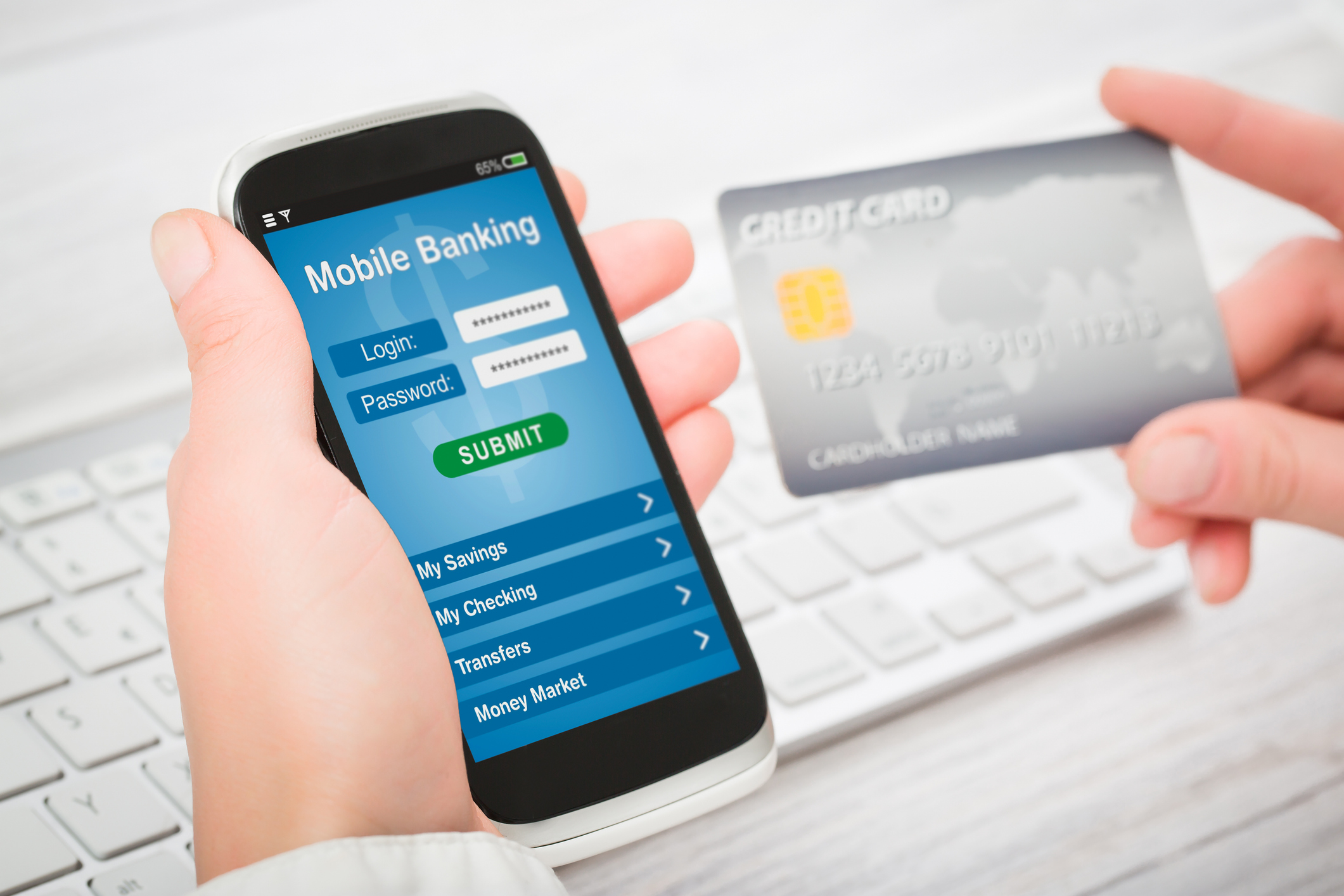
The downside to digital banking goes beyond any concern over making theft easier. It includes the severing of human contact.
Human-to-human contact, which is important, is lost in e-banking. “The disadvantage is that you do not have a person, a bank employee, in front of you to explain and/or help you with transactions such as bank transfers, etc.,” says Ferrarese.
“For purely practical reasons,” however, it’s not necessary to have a human-to-human based relationship with a banker in 2026, explains Ferrarese. “For consulting, especially strategic consulting, I would say that face-to-face meetings are the best solution.”
The dual track of digital connections and human interaction that Ferrarese outlines likely will persist. The weight given to one or the other will depend on the context.
“You will always need support during business growth or challenges,” says Doug Rucker, owner of Doug Rucker Store and Clean and Green Solutions in Porter, TX. “Whether financing equipment, adding a new service truck, or managing cash flow during slow seasons, a personal banker who understands your business can offer solutions that an app can’t.”
Suppose there are “fraud flags, chargebacks, or payment disputes—events that can delay funds needed for jobs or inventory,” explains Rucker. “Having a real contact and personal relationship at the bank can often help issues get elevated and resolved quickly.”
Then, there’s the knowledge base established. “A banker who knows your history can vouch for you,” says Rucker. That testimony can lead to better rates, credit lines, or approvals when expanding a company.
There’s a long list of positives tied to digital tools, says Rucker. “Faster cash flow and convenience for customers, professionalism and trust, and better recordkeeping and automation are three things that come to mind.”
And convenience also applies to the business owner. “Whether you’re completing a house wash or selling equipment online, digital payments allow customers to pay instantly—speeding up revenue collection and reducing the wait on checks or invoices,” says Rucker.
“Being able to securely accept credit cards, mobile payments, and online invoicing signals a modern, trustworthy business, which is important for both homeowners hiring a service provider and contractors buying equipment,” says Rucker. “Payment tools that connect with accounting, CRM, or invoicing systems reduce admin work.”
Automated, integrated systems mean it’s possible to track sales, taxes, job details, and inventory without manual entry, explains Rucker. “That’s especially helpful when managing both service jobs and product sales.”
But there are some negatives that creep in. “Credit card and online payment platforms charge transaction fees, which can reduce margins on both service jobs and equipment sales, especially for larger ticket items like soft wash systems or surface cleaners,” says Rucker.
Reliance on digital tools demands a reliable internet service provider (ISP). “If internet service fails, the on-site or payment platform experiences glitches, work can slow down or a customer may delay purchases,” says Rucker.
An ISP failure is “not ideal when working at a customer’s home or running a busy retail shop,” says Rucker. Then, there are the security issues.
“Handling digital transactions means staying on top of fraud prevention, data protection, and secure systems,” explains Rucker. That means adding complexity that small business owners may not always be prepared for.
Assessing the good outcomes and the potential problems with digital tools and online banking keeps a business owner grounded. “Personal support [is best] for complex issues like when dealing with large equipment purchases, financing, or even disputes. Online-only communication can slow down getting solutions—sometimes you just need a real banker who understands your business,” says Rucker.
“Then you also have cybersecurity concerns,” explains Rucker. “Any time you move money online, there’s a risk of fraud or account breaches—something that can impact payroll, vendor payments, or funds needed for upcoming jobs.”
And it’s not just a security or technical issue at the owner’s place of business that’s a concern. “Untimely system outages can stop business tasks in their tracks,” says Rucker. “If the bank’s platform goes down, you may not be able to transfer funds, pay suppliers, or deposit checks, which can delay equipment orders or payroll for employees.”
A Wonder and a Worry
The Federal Deposit Insurance Corporation (FDIC.gov) scrutinizes banks, including the way the banks handle online and mobile banking. With its commitment to insure $250,000 per depositor per bank, FDIC has good reason to evaluate bank security carefully.
Backing to the crowded radio spectrum again, we mention the FDIC warning that rogue cell towers built to hijack transmission signals must be added to the ever-growing list of security worries.
Nothing is perfectly safe. But is the digital world so perilous that we should worry more?

Current Digital Issue
|
|
Click to read.
|


Go Mobile