
Cleaning Wind Turbines
Written by Diane M. Calabrese | Published December 2024
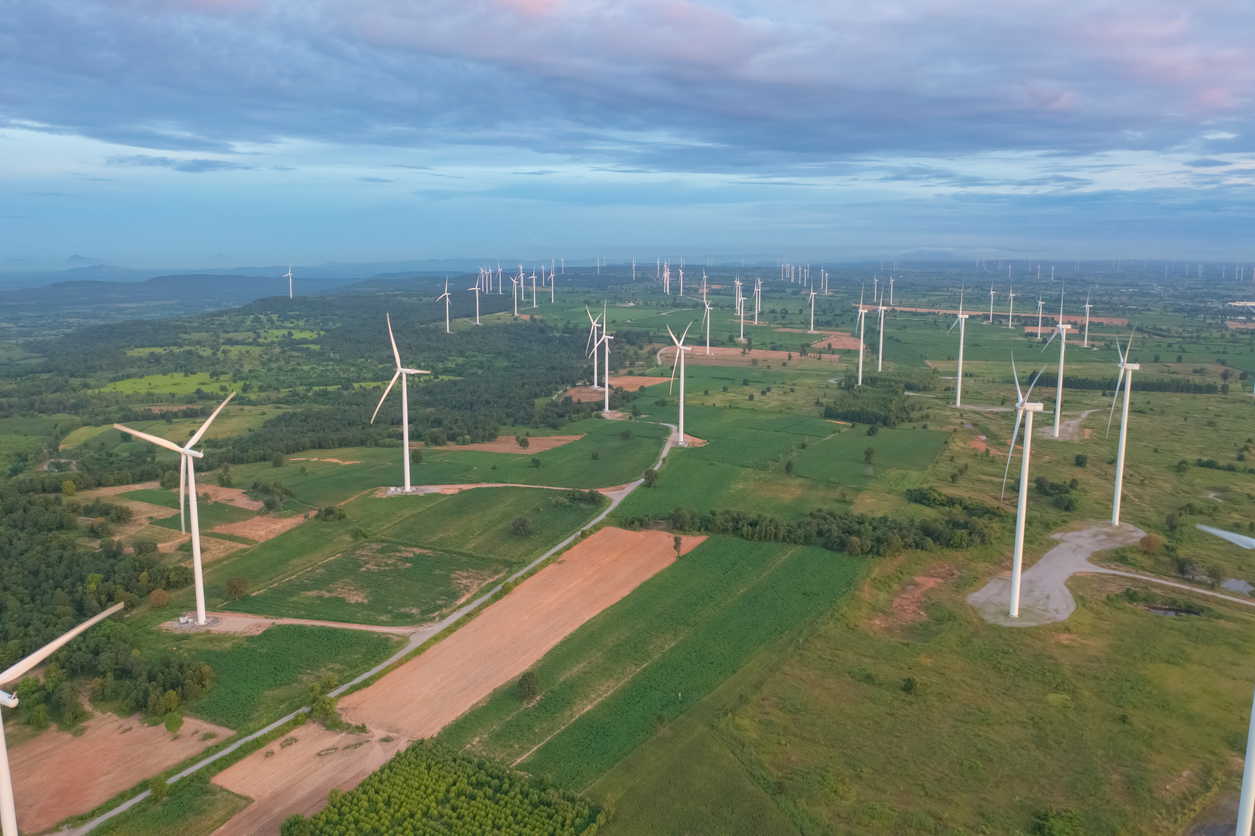
Opportunity appears first. Feasibility comes second. Wind turbines are far fewer than the 82 million U.S. homes, but they are out there and multiplying. According to the U.S. Wind Turbine Database, which is maintained by the U.S. Geological Survey, in August 2024 the turbine tally for 45 states and the territories of Guam and Puerto Rico was 74,833. For power washing contractors in states with many wind turbines, it looks like an opportunity.
What about feasibility? Some states have a concentration of turbines.
WINDExchange, a tool at the U.S. Department of Energy website, allows visitors to choose any state from a map of the country, click on the state, and get details about the capacity and number of turbines. (Try it via https://wind exchange.energy.gov/states.)
Perhaps there’s no need to check the WINDExchange because a contractor already knows where regional turbines stand and where they are being built. But are there calls to clean them?
More important, is there a place for pressure washers and ancillary tools in cleaning wind turbines? “Actually, yes in a big way,” says Christopher Blann, the CEO of PowerWash.com headquartered in Fort Worth, TX.
“We have a few clients who clean the large windmill turbines all over the country, using many of the pressure washer rigs we have built and using drones too,” explains Blann. “They also use industrial degreasers and pressure washers to keep those windmills clean and working well.”
Drones get deployed for certain work beyond cleaning. “Some are actually fitted with equipment to inspect the windmills for potential fail points and wear and tear,” says Blann.
Is there a place for power washing contractors in the efforts to clean wind turbines? “Yes, this is a little specialized as a niche, but it is an emerging business like cleaning solar panels,” says Blann. “Windmills are a lucrative option for the smart contractor.”
As with any emerging sector, getting in at the beginning of growth can be very good. (It can also lead to a loss, and that must be weighed too.)
Where does Blann recommend contractors interested in serving the wind turbine industry get started? “The best way to start is to talk to the windmill owners about what their specific needs, limitations, and concerns are. Then be open minded and develop a plan of action for the specific company,” he says.
Contractors who are already certified to work up high have an advantage perhaps when evaluating the turbine as a target for cleaning. They already use tools, including safety ancillaries, that enable them to work safely high above the ground.
There’s a certain amount of risk involved in every job or endeavor. The risk is greater when potential safety risks—like height and electrical energy generation—are in the mix.
“A contractor has to be comfortable with the task at hand and creative enough to develop an action plan to get the job done,” says Blann. Part of being comfortable, of course, is being creative enough to take steps to mitigate risks. It takes only a second to recall the wind turbines we have seen, and we realize immediately that we don’t see them in river valleys protected by towering mountains. No, they tend to be in places where the wind offers a significant bit of natural power to move the blades.

Consequently, many turbines are on the sides or tops of mountains. Others are erected in seawater or on flatland expanses in relatively unpopulated areas.
The location of wind turbines and their contribution to green energy spawn some of the special considerations about them. “One main consideration is ecofriendly products,” says Blann. “Another is a rig that can handle the terrain and bring water to the job site.”
Getting connected to the wind turbine sector may also motivate a contractor to become more familiar with drones. “Drones are proving to be a valuable tool,” says Blann.
Assessing The Scope
The U.S. Bureau of Labor Statistics ( BLS.gov ) provides a compendium of job descriptions. The BLS profile for a wind turbine technician gives prospective contractors a good idea of what working on a wind turbine in any capacity entails.
The majority of technicians are employed in-house, but 12 percent are self-employed. In 2023 there were 11,400 jobs held by turbine technicians, so well more than a thousand of them were available to contractors (the self-employed).
Strictly on the numbers, then, there is opportunity for members of the power washing industry. What about feasibility?
The likelihood of success in cleaning wind turbines begins with comfort about the logistics. A tower, three blades, and a nacelle (the housing for the generating equipment as well as sensors for trouble) are the components of a turbine.
It might be a climb of 200 feet to reach the nacelle. It’s a given that safety harnesses are in use. Physical fitness is a must for those tending to turbines. In addition to the climb, there’s the carrying of heavy tools.
Owners of turbines who hire technicians in-house typically set up their own safety training. The training includes first aid and CPR as well as rescue procedures. Electrical safety training is a must.
Green jobs are not synonymous with safer jobs. Situational awareness and appropriate training keep workers safe everywhere.
The U.S. Department of Labor includes a green jobs hazards summary at its website. Among accidents connected to wind turbines that have happened to date are death from arc flash (to a worker in the power cabinet/nacelle who touched a bus bar), a fire that resulted in the deadly fall of a worker trying for a rapid descent, and a deadly fall by a worker who wore a safety belt but neglected to attach the lanyards.
Complacency kills and injures in every workspace. Any contractor considering talking with turbine owners about possibilities for contract cleaning should already be well versed in safety procedures that will be expected.
The structure of wind turbines is quite consistent. We can all sketch the familiar shape from memory. Three blades rotate on a horizontal axis. Each blade can be longer than 100 feet.
Based on efficiency, most turbine operators in the United States have chosen the tower with horizontal axis blade configuration. There are vertical axis turbines, but they have gone out of favor. (Some suggest the vertical-axis turbines look like giant eggbeaters.)
The length of turbine blades correlates with the amount of energy generated. According to the U.S. Energy Information Administration (EIA), the largest turbines can generate (at optimum) 15,000 kilowatts (15 megawatts). A small turbine that serves a single home generates about 10 kilowatts.
The single, home-based wind turbines may offer opportunities for cleaning contractors. As with solar panel “roofs,” once a member of a community adds them, others often follow suit.
Cleaning wind turbines requires knowing the composition of the structure and moving on from there. Manufacturers and turbine owners will have the answers regarding composition, and owners will often prescribe the methods.
Steel is the biggest component (two-thirds or more) of turbines. According to the National Renewable Energy Laboratory ( NREL.gov ), fiberglass, resin, plastic, iron or cast iron, copper, and aluminum also get tapped.
For contractors who venture into cleaning (or maintaining) wind turbines, one more criterion may have to be met. Security of the national power grid has become a high priority in recent years. To gain access to some turbines, it may be necessary for a contractor to hold a security clearance. Clean (and unblemished) blades are the most efficient at converting wind energy to electrical current, and efficiency hovers only around 45 percent when they are at their best. For these turbines, cleanliness and protection from degradation serve a functional and thus financial purpose, so this market should remain solid for those serving the industry.
Current Digital Issue
|
|
Click to read.
|


Go Mobile