Cleaning Small Aircraft
By Diane M. Calabrese / Published April 2023
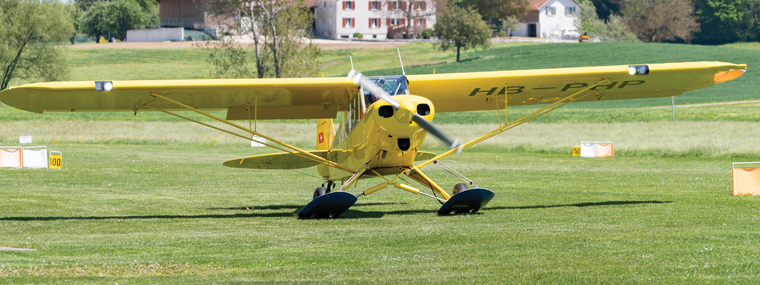
Just how many small aircraft are there in the United States? Enough to suggest cleaning contractors ought to take a look at the needs of their owners.
According to the Federal Aviation Administration (FAA), at the end of calendar year 2020, there were 204,100 general aviation aircraft in the United States. The number includes fixed wing (161,600), rotorcraft (9,700), and other/experimental/lightcraft (32,800).
General aviation includes all civilian flying except scheduled passenger service. The Aircraft Owners and Pilots Association (AOPA.org) recorded the amount of revenue generated by general aviation at more than $150 billion in 2019.
The sector definitely deserves a closer look. But before listing small aircraft cleaning as a service, be sure to know what’s expected of a contractor.
We take flying for granted until we stop and think about the physics of lift and drag: A flawless skin (exterior) maximizes airworthiness. If our mind drifts to pitot tubes [for measuring fluid velocity] and other instrument sensors, we realize they ought not be damaged.
“Doing no harm” is the biggest challenge in cleaning small aircraft says Linda Chambers, brand and sales manager at GCE/Soap Warehouse Brand in Norcross, GA. “Do no harm with the cleaners, the equipment used, or the process the contractor is using for cleaning.”
Some parts of the aircraft are amenable to application of pressure. Some are not.
“For instance, be sure to only clean, if using a high-pressure washer, by spraying from the tip to tail, front to back,” says Chambers. “Any reverse cleaning can damage delicate instrumentation that is housed on or just under the surface of the aircraft.”
Chambers’ company has deep expertise in manufacturing chemicals used to clean aircraft, and she shares some basic advice about cleaners.
“You should use a cleaner that has been proven not to cause hydrogen embrittlement and corrosion,” says Chambers. “You should not just use any chemical you normally would to clean a car or other vehicle.”
Choose chemicals that meet FAA criteria. “The FAA states any aircraft maintenance personnel should use
only products that pass certain test criteria for cleaners,” explains Chambers. “Even if owners are not using a certified maintenance person to clean, they should be sure certified chemicals are being used.”
The FAA issues an advisory circular (FAA AC 43-205) that provides test criteria to be met to qualify as aircraft general cleaning products. The protocols for tests are outlined by ASTM. In addition to hydrogen embrittlement, the tests evaluate sandwich corrosion, immersion corrosion, effect on painted surfaces, acrylic crazing, and residue.
Again, although the tests are not mandated by the FAA (i.e., they are not a regulation), a well-chosen chemical match for cleaning an aircraft should meet the criteria in the advisory circular. The chemical will be advertised as meeting the criteria.
The actual washing of a small aircraft will likely involve manual washing or be done exclusively by that mode. “Many times aircraft will need to be washed with certain chemicals by the more time-consuming handwash method versus using high pressure and power washing,” says Chambers.
Then, there’s the issue of water. “Most times wastewater must be 100 percent reclaimed—to be filtered and cleaned prior to discharge,” says Chambers. “This is why some airports only allow what is classified as dry washing, a process in which chemicals are placed on pads that are then hand applied to the surface to loosen and remove debris.”
After the debris is loosened, the use of pads continues. “Pads wetted with deionized or distilled water are used to rinse off debris, followed by dry pads to finish removing any wet debris to dry the surface,” explains Chambers.
Using a cleaner that does not meet FAA criteria creates unnecessary danger with potential for serious negative consequences. “Any cleaner used on the outside of an aircraft should conform to certain certifications to show that the chemicals are not going to compromise the integrity of the aircraft,” says Chambers.
How serious? “Using non-certified cleaners can be very dangerous and can lead to crashes,” says Chambers.
The National Transportation Safety Board (NTSB) reports on the causes of plane crashes include everything from a plane being filled with the wrong fuel to failure to de-ice. Pilots have ultimate responsibility for ensuring their craft gets the correct fuel, etc.
Pilots also have responsibility for making sure that whoever is cleaning their aircraft is doing it properly with sanctioned chemicals. Thus, contract cleaners who enter the sphere of small aircraft cleaning should expect—and welcome—scrutiny.
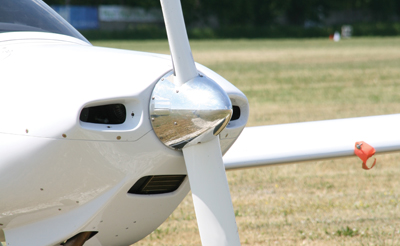
Photo by iStockphoto.com/agoxa
Assessing Opportunities
There are companies that specialize in cleaning small aircraft. Therefore, contractors may find more opportunities in regions where owners of small aircraft are few, where the niche is not already filled by a company that focuses exclusively on cleaning aircraft.
On the other hand, contractors must weigh the amount of time it takes to clean a small aircraft. Both dry- and wet-washing methods take time. Is it possible to trek to an airport, clean the plane, and make the investment worthwhile (profitable)?
Much depends on the amount of business a contractor can find. According to the FAA, there are 19,723 airports in the United States, and 14,539 of them are private. For contractors near private airports, there may be many owners of aircraft looking for someone to do regular cleaning.
There are 609,000 certificated pilots in the United States. If you’re not a pilot, it’s likely there’s a pilot or two among acquaintances. Talk to pilots in informal and business settings and use the conversations to evaluate possibilities. Read some of the entries at General Aviation News (https://generalaviationnews.com) to learn more about the interests of general aviation pilots.
Become familiar with cleaning methods. Then, go to a nearby airport and evaluate the way planes are being cleaned and by whom. (Note: Whether private or public, airports are under strict—if sometimes quiet—security. Be sure to talk with the operations manager before wandering within permitted areas.)
The AOPA.org website offers some guidance in how to clean a small aircraft. Awareness—care to do no damage—governs all. Pitot tubes and static ports must be covered and protected. Bright tape covers make it less likely to forget to uncover them. Warm water and manual force remove stubborn insect remains. Cleaner specific to plexiglass is a must on the windshield. And polishing, with wax or furniture polish, completes the process.
The manufacturer of an aircraft provides detailed instructions on maintenance. Get a copy of a manual for a common model of small aircraft and read the recommendations for routine cleaning.
FAASafety.gov consolidates wide-ranging information related to air safety. Spend time there to become familiar with the many responsibilities an owner of a small aircraft has. For example, the eight-page document “Maintenance Aspects of Owning Your Own Aircraft” offers in its outline of pilot checklists a good introduction to the intricacies of a plane.
The aircraft owner must inspect routinely for things like cracks, cuts, or wear in wheels; cracks in the windshield; and damaged bulbs and reflectors. Any contractor who cleans small aircraft becomes a second set of eyes to notice and alert the owner of the plane to such issues.
Any preventive maintenance done on a small aircraft must be recorded. A contractor may be asked to provide a signature, license, and any certification for that log on the completion of cleaning.
The FAA does not require drug testing of employees who clean the exterior of small aircraft, but the plane’s owner or an airport might require it. Each airport will have its own list of criteria for contractors working on site.
Cleaning small aircraft is only one of the possibilities for contractors at airports. Many contract cleaners already are sanctioned to work at airports to clean parking garages, walkways, and exteriors of buildings and to remove graffiti. As in any sector, combining related services as a bundle for clients and minimizing travel can add to the bottom line.
The FAA discourages owners of small aircraft from doing their own preventive maintenance. Why? Complacency is one problem. Creating a problem is another.
As for a cleaning contractor who even thinks of assisting with preventive maintenance of a modest sort (e.g., replacing a bulb), there is one word: Don’t. FAA regulations stipulate that only certified pilots can take on preventive maintenance tasks, however small.
Small aircraft owners have different levels of tolerance for safety, even within the context of required—and followed—protocols. Some may wash their own planes. Some may only go to a large, specialized outfit for cleaning. But some will be open to help from a contract cleaner.
When cleaning small aircraft, a contractor must be committed to safe practices. Big, bulky landing gear merit as much protection as the small, exterior sensors on the plane because metal components can be damaged by pressure.
There’s a lot of money flying around with small aircraft. General aviation makes up almost 90 percent of civilian flying. Aviation contributed as much as five percent to the GDP prior to 2020, a share that it is steadily regaining. It’s worth investigating whether this would be a profitable business sector to join.
Current Digital Issue
|
|
Click to read.
|


Go Mobile