

Chemical Storage
by Diane M. Calabrese | Published November 2025
The things we know to do and the things we do sometimes diverge.
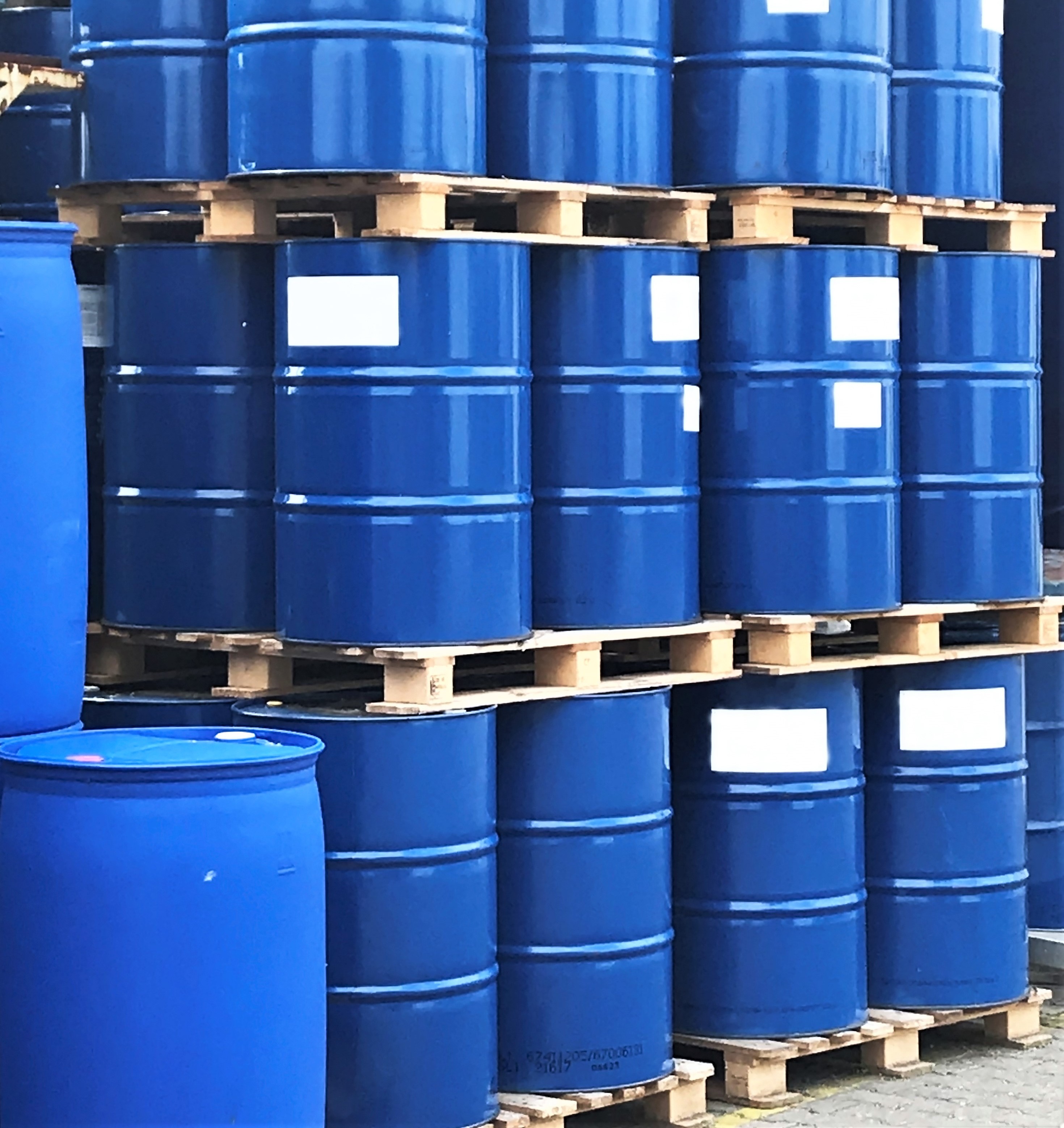
No member of our industry is unaware of the basics of chemical storage. Make that safe chemical storage. Yet haste and exhaustion have a way of pushing people toward a just-this-one-time decision, and somehow a liquid chemical and a dry chemical get stashed side by side.
Complacency has become the polished term for an avoidable error, but we know complacency just gives some cover to the harsh reality of a lackadaisical attitude. Careless action—often the same as inaction—leads to serious problems in all spheres. In the sphere of chemical storage, incompatible chemicals that meet can lead to injuries and death as well as structural damage to edifices and vehicles.
Yes, damage can impact vehicles because chemicals must be stored correctly in all settings. That includes inside the vehicles of contractors and haulers for manufacturers and distributors.
Safety is the priority issue that proper storage addresses. But it’s not the only issue.
Degradation of chemicals that are stored improperly can lead to serious problems on jobsites. To ensure chemicals do not degrade, contractors must keep them in an environment that prevents alteration.
“Contractors should pay closer attention to temperature control in chemical storage,” says Missy Tanguay, business development manager at Deco Products Inc. in Denver, CO. “Excessive heat or cold can alter chemical stability, reduce effectiveness, and even create safety hazards.”
Tanguay emphasizes that her recommendation pertains to all. “It applies not only to our company’s products but to all coatings, sealers, and related chemicals—always store them in climate-appropriate conditions to maintain performance and safety.”
The amount of assistance with chemical storage from the federal government—particularly the EPA [Environmental Protection Agency] and OSHA [Occupational Safey and Health Administration]—along with state environmental and safety government partners and local jurisdictions is enormous. Professional organizations and the many commercial vendors of safety instruction can help contractors, distributors, and manufacturers sort through the mass of information.
In addition, manufacturers of chemical products and manufacturers and distributors of chemicals provide assistance through the instructions for use (including storage) that accompany their products.
Always read the instructions/directions first. How many times has each of us heard that admonishment? It’s a serious one when chemicals are involved. Foodstuffs may perish if they are not stored properly, but people may perish if chemicals are not stored correctly.
Areas of Concern
Heat and light are often not taken into consideration by contractors, says Linda Chambers, brand and sales manager at GCE/Soap Warehouse Brand in Norcross, GA. She says, “These are the major killers of chemicals.”
What makes them killers? “Heat excites the molecules allowing bonds to break and reduces the strength of the cleaner,” says Chambers. “Light is not as harmful but will still degrade the product and may change the color of the product depending on the type of dyes used to color it.”
Everything about compounds must be taken into consideration by chemical compounders, manufacturers, and distributors. And it is.
For instance, red dyes are more susceptible to light, explains Chambers. “That means a red or purple product may turn a light pink or turn blue or turquoise green when left in the sun.” Sunlight-induced change in dye color may be tolerable. But if a product heats up due to sun exposure, its strength may be altered, says Chambers.
Both heat and light affect bleach, explains Chambers. “It is why most vendors sell bleach in solid color containers like blue versus opaque white or clear.”
True, says Chambers, it may be easier to see levels of bleach in a clear container, but the transparency allows heat and light to degrade the bleach. And the degradation is not insignificant at all. As much as “one percent degrades every 30 days,” says Chambers. “In heat bleach gasses off, loosing potency, so keep containers as near to full as you can and keep lids tight.”
There are many areas of concern regarding storage that tend to be overlooked by contractors. Even if a jurisdiction has no laws against storing chemicals in vans or trucks when they are not in use, or even if the chemical seems relatively innocuous, the practice can still be risky given the incidence of vehicle theft and vandalism.
“Not only to avoid theft but for safety and chemical mixture hazards, precautions must be taken,” says Chambers. “All chemicals should be locked away and stored separately depending on type.”
An example? “Never store acids in the same space as bleach due to the possibility of reactions from spills.”
Beyond avoiding the dangers of inadvertent mixing, anyone storing chemicals—on a vehicle or in a stationary structure—must impose barriers between chemicals and people. “You need to make sure the public cannot come into contact with your containers as even chemical residue left on the outside of a container if touched by any unknowing person can be dangerous and become a costly lawsuit,” explains Chambers.
Indeed, Chambers recalls an incident (some 15 years ago) in which a child (may have) touched unmarked jugs on a contractor’s open trailer, which was parked in a grocery store lot. The child touched its eyes and began to wail.
Doctors figured out the eye injury was from chemicals, and the mother recalled the open trailer. “When police investigated, they found acids, caustics, and bleach containers with wet and dried residue on the outside of them along the edge of the open trailer,” says Chambers.
Legal action was taken against the contractor, whose defense argued the child could have touched the chemicals in the store. It could not be proven the trailer was the place where the child touched the chemicals. Nevertheless, the judge ruled that the contractor had created a hazard to the public. The legal fight was long and costly.
Restricted, secure access is a must when storing chemicals, whether on vehicles, in transit, or in a storage room/facility. One of the challenges for contractors is finding containment solutions.
“When looking online you will mostly find only large-sized solutions being offered and sold, like entire chemical buildings or tall storage lockers,” says Chambers. “It is difficult to find smaller storage solutions, so alternative solutions can be adapted from other applications.”
Chambers has a suggestion. “I like metal, lockable toolboxes sold for trucks, trailers, or RVs. Then line them with rubber or plastic trays or bins for spill containment.”
“New and fledgling contractors may find metal-are-too-expensive solutions,” says Chambers. “Then heavy plastic lockable bins are an option. Etrailer.com has both metal and plastic options. Stores like Lowes and Home Depot sell metal job boxes that will also work. Stores like Tractor Supply have plastic and larger composite-sided containers normally used to store feed.”
A safe storage plan begins with following the guidelines from OSHA for storage, segregation, and handling of chemicals just as Chambers’ company does. Chambers shares two examples of the result of adherence to the guidelines. “We have chemical storage cabinets in the shop for oil, aerosol spray cans, and small amounts of liquid chemicals. We have a large outdoor storage shed for the tanks of bleach, other chemical storage in the warehouse, totes with containment trays, and bagged chemicals separated from liquid chemicals they could react with if we had a spill.”
Minimize Risk
If there’s one overarching principle in storage of chemicals, it is to minimize risk. The minimization begins with common sense, such as labeled, sealed, and suitable containers in a secure location.
That’s a secure location protected from vandals as well as the elements. Containers should be easy to access and difficult to dislodge or tip over. (No one should be bumping into containers as they move to get from one place to another.)
Prepare for the worst. If there is a spill, are SDSs [safety data sheets] immediately accessible? Do employees know how to respond, and have they been regularly tested in response?
Beyond the OSHA expectations for storage, there are complementary and some additional expectations from other entities. For instance, the National Fire Protection Association (NFPA) and CISA (CISA.gov) enter the picture.
CISA, the Cybersecurity and Infrastructure Security Agency, could take an interest in stored chemicals at any time. Until July 2023 when the law for Chemical Facility Anti-Terrorism Standards (CFATS) expired, it required a separate accounting of certain chemicals to be submitted. Now it offers ChemLock, which is a voluntary chemical security program offering on-site assessments and guidance for a facility security plan.
NFPA 30, the fire and combustible liquids code, applies to all stored chemicals; and OSHA CFR 190.176 applies to all storage areas, including those for chemicals.
Depending upon what’s being stored, the requirements to be met could increase. If chemicals deemed hazardous are kept on site (i.e. any chemical that requires an SDS), a Tier II inventory form must be submitted to meet the requirements of EPCRA [Emergency Planning and Community Right-to-Know Act], which is administered by the EPA.
That concludes a very short list of the output from regulatory bodies interested in chemical storage. In addition to starting with common sense to achieve safe and manageable storage, be sure to continue with good hygiene (e.g., routine checks and updates, retaining only what is necessary in the smallest workable amounts).
Current Digital Issue
|
|
Click to read.
|


Go Mobile