
Current Digital Issue
|
|
Click to read.
|


Theft Prevention: It Is Up to You to Stop It
By Diane M. Calabrese / Published September 2015
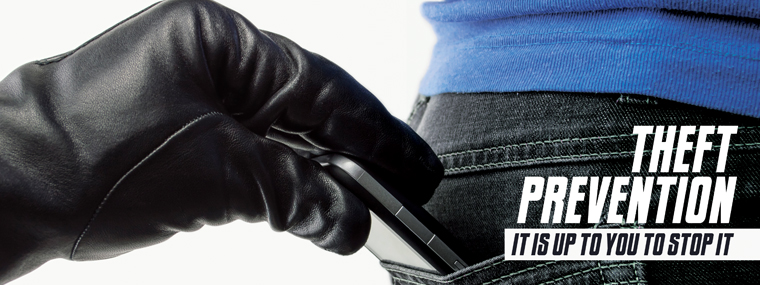
Don’t take anything that doesn’t belong to you. Schoolchildren were once as acquainted with the admonishment as they were with the reminder to look both ways before crossing the street.
Yet there is probably not a single reader of this sentence who has not been the victim of theft. On the home front, many of us have had experiences with everything from solar lights to cars and computers being stolen. At businesses, equipment, money, and credit card information all must be protected because they too go missing in numbers far too large for a 21st century society.
As we write in early June, the banner on the website of the U.S. Office of Personnel Management (OPM) reads (in all capital letters): Important Infor-mation about the Recent Cybersecurity Incident. That incident, of course, involves the theft of more than four million records of current and former federal employees—records that include vital statistics, work history, health insurance, and banking information.
The OPM details what it has done to increase cybersecurity. Then, it provides suggestions for mitigating risk resulting from the data breach. The takeaway: Theft prevention is an individual responsibility in the electronic world. (And it’s much the same in the real world.)
Several years ago, Dennis Black, president of McHenry Pressure Cleaning Systems, Inc. in Frederick, MD, spoke with us about security upgrades he had made to his facility. They came in response to a smash and grab burglary and other break-ins.
“Our store front was broken into years ago, in a series of three different cases,” says Black. “We installed better and better alarms and systems.”
Video surveillance is now such a common part of theft (and crime prevention) there is virtually no spot in Washington, D.C. where one is not being recorded. Technology has grown to prevent theft.
At the same time, technology facilitates theft. Data breaches are obvious examples. But thieves routinely use wireless technologies to stay in touch with one another and provide a lookout during a crime. One person breaks and enters; another issues an alert if anyone approaches the site.
Types of theft are as varied and fluctuating as the possibilities for stealing. “I have seen other companies appear to have more theft of equipment—from rentals, job sites, etc.—recently,” says Black.
Action must be taken to prevent theft in whatever form it takes. “We had a little problem with bad checks over the years,” says Black. “Thorough diligence is the only prevention I know of.”
Prevention transcends a specific type of theft. “Be vigilant and aware,” says Black. “Ask for identification and be aware of who your customers are as much as possible.” Adjusting prevention to the threat is also necessary. “Electronic theft and scams seem to be more prevalent in recent years,” says Black.
Concern about an employee stealing from a company prompts many employers to institute background checks prior to hiring. It sounds good, but…background checks cannot infringe on the rights of the individual. “It appears to be a balancing act on not violating their privacy and rights, etc.,” says Black.
Some jurisdictions, such as the Commonwealth of Virginia, have instituted policies prohibiting employers from asking job applicants about their criminal record until after they have received a job offer. (There are exceptions for certain types of jobs, but the exceptions are rare.)
Broad Definition
It requires resilience to deal with a theft and fortitude to do everything possible to prevent theft. “Theft prevention is a multifaceted endeavor,” says Ben Hagemann, purchasing manager at American Pressure, Inc. in Robbinsdale, MN. “Much theft can be prevented with good processes, ensuring customer and company data is secure, tracking parts and equipment inventory, and the like.”
The forms that thefts take are enormous. Resources can be taken from a company—diminishing the strength of a company, as all theft does—in ways that are not in straightforward terminology a theft. Such episodes must also be protected against.
Hagemann cites some ways that companies can be depleted. “While not usually thrown in the narrow or legal definition of theft, there are things like illegitimate complaints, excessively slow paying customers, and those who take advantage of the time and energy you spend with them,” he explains.
For the quieter forms of depletion—those short of outright theft—Hagemann has some recommendations for prevention. “Communication is one of the best overall strategies to prevent some of the subtle forms of theft,” says Hagemann.
Make sure that customers understand what a warranty covers—and make certain they realize a warranty does not cover the repair of damage caused by misuse of a machine, says Hagemann. As a correlate, be sure that service technicians are circumspect in what they tell a customer and clear in documentation, so that a customer does not misinterpret what’s said.
“Some customers will say, ‘Your service technician told me this was under warranty, I am not going to pay the bill, and I owe nothing for this repair’,” explains Hagemann. “What the technician actually said is, ‘I don’t think this part is covered under warranty, and I know the labor is not under warranty. I will need to check further and submit this part for evaluation.’”
Be clear. “If you communicate and document what is said, this can eliminate many of the headaches and the need to discount repair bills,” says Hagemann. “Documentation and clear communication can prevent the loss of revenue and also keep customers more satisfied.”
And be explicit. “‘No warranty on labor and parts will be submitted for possible warranty’” is a good way to write a work order to avoid problems, says Hagemann. “The question of payment is settled, and it can be pointed out that the customer knew labor would not be covered and even signed to that effect on a given date.”
Do What’s Possible
Electronic tools (alarms, monitoring) and physical barriers (reinforced doors and windows, good lighting) are familiar ways of thwarting thieves. So is trying to prevent would-be thieves from gaining a place on the employee roster.
Good advice is everywhere, but putting it to use demands that one do a self-check to ensure implementation meets legal parameters. Growing limitations on background checks are just one concern.
In 6 Tips for Preventing Employee Theft and Fraud in the Workplace by Caron Beesley, an offering of the U.S. Small Business Administration (SBA) via https://www.sba.gov/blogs/6-tips-preventing-employee-theft-and-fraud-workplace, there are many caveats. Even some tips without cautions merit some.
The second tip, for example, reads “check candidate references.” Many businesses, however, will not allow their employees to say more about a former employee than to confirm the person once worked for the company and the dates of service. Businesses fear litigation for any perceived negative statement.
Other good tips are to establish a code of conduct, audit (financial transactions, sick days, and social media interaction) and be alert to signs of trouble. (Again, though, going in any of the suggested directions requires care so as not to infringe on employee rights.)
Most useful, perhaps, is the last tip, which is to “set the right management tone.” Model the correct way to conduct business activities. Demonstrate and believe that it is possible to create an environment—society—where doing the right thing is the norm.
Go Mobile