Who Is Responsible? Liability Reduction
By Diane M. Calabrese / Published December 2018
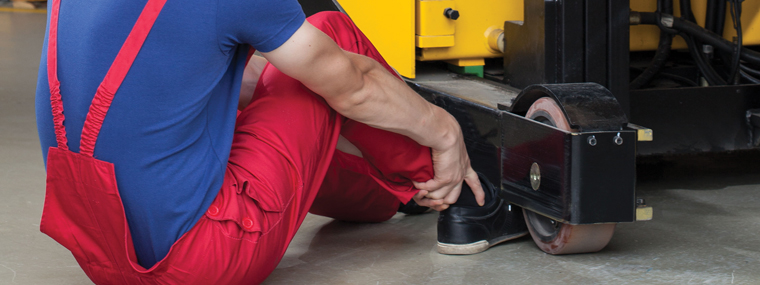
Reduction of risk…why not elimination? The short answer: Never say never. Things happen even when all protocols are followed scrupulously.
And liability will be assigned. It may even be shared, not necessarily equitably.
Who knows who will ultimately be held responsible for the improbable collision (and ensuing spill of propulsion fuel) between two merchant ships in the Mediterranean Sea near Corsica on October 7, 2018? As culpable as one ship may appear, with its bow wedged against the hull of the other, no one knows what investigators will determine.
If a meteorite strikes an employee at a job site or damages a rental unit being used by a customer, the incident may prove the exception to a business owner’s global liability, but don’t count on it. An ardent lawyer could make the case that warnings about a high likelihood of meteor showers should have been given.
So, focus on reduction. Do all that’s possible and then, carry on. Three experts in our industry share some suggestions on how to meet the ever-present challenge of reducing liability.
Begin with the fundamentals. “Employee motivation” is essential to ensuring that everyone working in a business is engaged and alert, explains Robert Hinderliter, environmental consultant in Fort Worth, TX. “I use monetary incentives” to promote engagement, he says.
Any part of a business can be the source of a liability issue. Hinderliter says that poor workmanship and driving are concerns for employers. So, too, are customer relations that can, should they turn negative, affect customer perception.
A valued employee must have a good attitude that encompasses “taking responsibility for mistakes,” says Hinderliter. When mistakes are made and quickly acknowledged, they can be corrected.
To build a team where there is give and take—all toward the goal of excellence—everyone must demonstrate a “willingness to accept feedback and recommendations from employees and customers,” says Hinderliter. “Make sure everyone feels he is an important member of the team and feels free to express his feelings.”
As for the incentives Hinderliter cites, he explains they can be used as a catalyst for building a cohesive group of employees. “I paid everyone the same yearly bonus if there were no issues. They would monitor each other to make sure their bonus was not jeopardized by anything.”
Well-trained employees benefit from in-house and external educational opportunities. CETA Power-Clean tradeshows offer “good training as well as certification seminars,” says Jimmy Welch, the HPW compliance and technology manager, US, at Nilfisk High Pressure Washers (Redlands, CA), who is based in Fort Pierce, FL, at Pressure-Pro.
Every certification obtained by an employee adds to the strength of a business. A contractor, distributor, or manufacturer can point to the certified employees as evidence that a company strives for excellence, which includes safety in every context.
 Equipment is the partner to excellent employees in reducing liability. Machines must be in perfect condition and properly maintained. To that end, Welch offers some reminders for contractors, manufacturers, and distributors.
“Contractors must wear the proper PPE (personal protective equipment)safety equipment, read all literature that comes with the product such as safety and operation manuals, and make sure all users of equipment are properly trained,” says Welch. He adds that employers should have employees sign a training document.
“Distributors should sell a product that is safety listed and provide the end user with all the literature that comes with the product—safety and operation manuals—and take time to train buyers on the safe operation of the product, as well as always provide original replacement parts to maintain the safety listing,” says Welch.
Modifications by distributors to equipment are not forbidden, yet they have to be done correctly. “Any equipment modifications should be done correctly by using component parts that are properly rated,” says Welch. “The service department should be properly trained and only use original replacement parts.”
Alterations of equipment by distributors or contractors that are not in accordance with the original equipment manufacturer’s specifications for maintenance and service can create a world of problems. And those problems include increased—and unnecessary—liability.
“Manufacturers must manufacture safety-listed products,” says Welch. He reminds readers that doing so requires following current U.S. pressure washer standard UL 1776 (until March 1, 2021) and the new UL 60335-2-79, which was published on January 14, 2016, and Canadian standard CAN/CSA-E60335-2-79.
For a quick refresher on the sequence of adoption and retirement of the aforementioned standards, Welch recommends two Industry News pages from this magazine. See page 36 of the March 2016 issue for a primer on UL 60335-2-79 (pubs.royle.com/publication/?i=292639&article_id=2415188&view=articleBrowser&ver=html5#{%22issue_id%22:292639,%22view%22:%22articleBrowser%22,%22article_id%22:%222415188%22}). And see page 22 of the May 2016 issue for an explanation of the sunset date for UL 1776 (http://pubs.royle.com/publication/index.php?i=298745&m=&l=&p=24&pre=&ver=html5#{%22page%22:%2224%22,%22issue_id%22:298745}). Until March 1, 2021, UL 1776 meets certification requirements for equipment that has not been modified. After that date, all equipment must comply with UL 60335-2-79.
Diligence
Constant and careful approaches to all tasks minimize the possibility of an error. Fewer errors generally equate with reduced liability. Safe practices and safe products are inextricably linked to mitigation of risk.
Certification verifies that industry-wide standards are being followed, whether it’s in the performance of work at a job site or the making of a machine. “Certification of products by a manufacturer to industry safety standards” cannot be overstated as a way for manufacturers to reduce liability, explains Dr. Marlo Dean, senior support services manager at Kärcher North America in Camas, WA.
All members of the industry should comply with OSHA and Consumer Product Safety Act requirements, says Dean. In doing so they “verify a product that is distributed is safe for the consumer” to use.
The rigors manufacturers go through to certify products clearly demonstrate a commitment to safety. “Certification by a third party requires manufacturers to perform safety tests like current leakage, dielectric strength, and ground testing,” explains Dean. “Manufacturers must have their test equipment calibrated and follow specific procedures. Every three months manufacturers have their certified products inspected under the follow-up inspection program.”
By inspecting both products and testing instruments, third-party entities play an important role in helping businesses reduce liability. “Products must be designed and constructed to the industry safety standard, which requires safety items to be installed and verified under the testing performed,” explains Dean. “It is an expensive process, but it reduces the risk for product liability.”
Distributors do their part in maintaining the integrity of products—and reducing liability—by ascertaining their service personnel understand industry safety standards. The better everyone understands the safety standards, the more effortless it will be for service technicians, for example, to verify that a product’s safety controls are operating as designed, explains Dean.
During any service call, a technician should make certain the unloader valve, pressure-relief valve, thermostat, flow/pressure switch, burner (check carbon dioxide and carbon monoxide emissions), safety controls, and all other elements are operating correctly, says Dean. He explains a ground wire test should also be done, and a check should be made to determine necessary warning labels are still in place.
Good employees, good equipment, third-party testing, and certification fortify a business in a litigious world. Yet there’s more that can be done to buttress a company. “Keep accurate records,” says Dean.
If there is an incident, documentation on certification and inspection becomes critical. (Following the perpendicular meeting of the two merchant ships near Corsica, representatives from all interested parties—ship owners, country of origin, country of ship registry, etc.—quickly converged to determine what happened. All will want to see documentation of procedures and training.)
Part of doing business is becoming educated about the laws that apply to employee rights, employee safety, and product safety, says Dean. It’s also a good idea to be realistic about risk.
Manufacturers can reduce liability by developing a reporting system that ensures all problems are reported from customer service and from distributors, says Dean. By implementing a quality assurance program, a manufacturer can use reports to identify problems in the manufacturing process, if any, and correct them.
“A business owner can avoid risk by not carrying out activities that have severe and likely consequences—and low benefits,” explains Dean. For a contractor, an out-of-the-norm job, such as removing mold from atop a water tower, may seem tempting because of the compensation. But if the contractor has no one trained—or just trained—to work high, a pass might be the best choice.
Insure against potential claims, of course. And select a business structure (e.g., corporation, limited-liability) that reduces personal liability, says Dean.
The line of separation between businesses should be clear. For example, hold harmless agreements clarify that contractors using a manufacturer’s equipment and suppliers selling the equipment are responsible for their own negligence, errors, or omissions, explains Dean. Securing statements of financial responsibility or proof of insurance from contractors and suppliers can also reduce liability for a manufacturer.
Reducing liability is good for a company. And it’s good for the economy. Funds that must be used to pay medical bills, compensate claimants, and pay higher insurance premiums (the likely endpoint of a claim) diminish capital available for operating a business.
Current Digital Issue
|
|
Click to read.
|

Go Mobile