Current Digital Issue
|
|
Click to read.
|

Financial: Rewards for Owning the Building
By Mark E. Battersby / Published October 2014
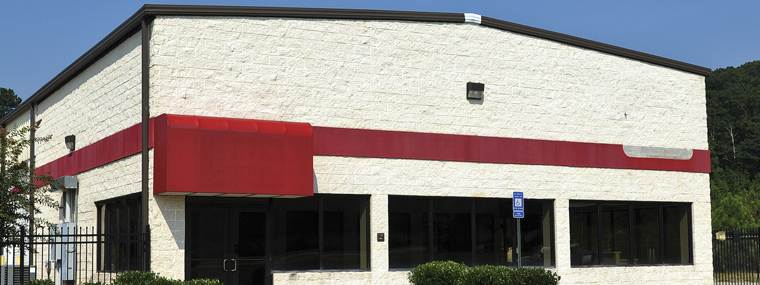
An increasingly popular, tax-saving strategy involves transferring ownership of the pressure cleaning business’s building or other business equipment, property, or assets to the operation’s owner, partner, or shareholder. For many businesses, a sale-leaseback can mean liberating badly-needed cash in exchange for executing a lease and paying rent. For other contractors and equipment dealers, it’s for asset protection purposes such as when a lawsuit is filed against the business or other issues arise. After a sale-leaseback, the building would at least be protected from any legal actions.
For the building’s new owner, there are tax benefits, helping them achieve a lower personal tax bill, income legitimately removed from the business and, quite often, more financing options.
Before rushing to take advantage of this strategy, however, every pressure cleaning business owner should consider whether this is a good, viable strategy for them and their business. Questions such as under what type of entity should ownership exist, who will pay the mortgage,who will reap the tax deductions and, the often overlooked question of what happens if the business changes hands or the owner exits require answers.
A Basic Sale-Leaseback Transaction
Since a building and often the land on which it sits are a necessity for any business, a sale-leaseback enables a pressure cleaning business to reduce its investment in these non-core business assets (the land and building) while freeing up cash.
These transactions, in which an operating business sells its owned and occupied real estate to the operation’s owner, shareholders, or investors and leases the space back on a long-term basis, are a popular way to free up capital for business expansion.
Favorable Leasing
The pressure cleaning business selling the building, now the showroom, shop, or headquarters building’s tenant, can negotiate favorable lease terms. In a typical lease, the lessee makes a single rental payment, and the lessor pays all of the property’s operating expenses. With a “net” lease arrangement, the lessee pays rent and also pays all of the property’s operating expenses. Thus, the landlord receives a fixed rental payment, net of all property expenses.
Most sale-leasebacks are structured as so-called “triple-net” leases with the tenant responsible for the taxes, insurance, and common area maintenance. A long-term, “hands-off” lease gives the tenant control over the property similar to when the tenant owned the property. The tenant can of course work with the building’s new owner and include options that will provide for future expansion and sublease of the property.
As property owners, the interest expense and depreciation were the only tax deductions usually available to the business. A business leasing its premises can, on the other hand, write off the total lease payment as a tax expense. Thus, a sale-leaseback may have a greater tax advantage and produce a bigger tax deduction.
Unlike a mortgage, a sale-leaseback transaction can often be structured to finance up to 100 percent of the appraised value of the business’s land and building. As a result, a sale-leaseback more efficiently uses the operation’s investment in the real estate asset as a financing tool.
However, because a sale-leaseback is not technically a financing instrument there are no restrictive covenants on the business. And fewer covenants provide a pressure cleaning business with greater control over its own business and operations.
Trust, LLC, or Corporation
The new owner of the business’s building can be a trust, corporation, a limited liability company (LLC), or even a partnership consisting of the owner and several shareholders or key employees. Since owning commercial real estate involves risks that are different from owning a business, establishing an LLC or other similar entity to own the building allows the two to be kept completely separate. The new owner can then lease the building back to the business, as well as to other tenants if space permits.
A “trust” is a unique entity as well as being a whole separate taxable entity for federal income tax purposes. A trust usually involves an arrangement created either by a will upon the creator’s death or by a trust instrument that may take effect during the creator’s life. Under either arrangement, a trustee takes title of the property in order to conserve it for the beneficiaries. However, even if the beneficiaries are the persons who planned or created it, the trust will still be recognized as a separate, taxable entity so long as its purpose was to vest the trustee with genuine asset conservation and protection responsibilities.
A so-called “business” or “commercial” trust is a trust created as a means of carrying on a profit-making business, usually using capital or property supplied by the beneficiaries. The trustee or other designated persons are, in effect, managers of the undertaking, whether appointed or controlled by the beneficiaries. This arrangement is treated for federal tax purposes as an association, which may be taxed as a corporation, or as a partnership, and is distinguished from the other types of trusts.
Material Participation in Passive Activities
Our tax laws create a unique dilemma regardless of the entity used to hold the pressure cleaning business’s building. On the one hand, thanks to the Health Care and Education Reconciliation Act of 2010, beginning in 2013, many individuals are now subject to a 3.8 percent Net Investment Income (NII) tax.
Net investment income includes not only rents, but interest, dividends, annuities, and royalties. Although NII does not apply to income derived in the ordinary course of a trade or business, it does include income from a so-called “passive” activity.
And it is the IRS that decides whether an individual materially participates in business activities, that is if he or she participates on a “regular, continuous, and substantial basis.” If it is determined that an individual’s participation is not material, he/she cannot deduct losses to the same extent as a business owner who does materially participate in the business.
Thus, regardless of the type of entity the new owners choose to own the pressure cleaning business’s building, the NII will add the additional tax on the profits from that “passive” activity. And, if the operation is “passive,” losses will also be denied or limited.
Reversing or Getting Out
The owners of many pressure cleaning businesses have successfully held the business and the building housing it as separate entities. Consider,
however, an owner who is thinking about retiring in a few years, and selling his or her business at that time. Many small businesses are sold with seller financing, meaning the owner would get a portion of the price up front, and then the buyer would pay the rest of the purchase price from the business’s earnings over the next few years.
Further, suppose the buyer fails at running the business. The original owner gets a double whammy: he is not getting paid for his business, and his building just lost its only tenant. The original owner must still make mortgage payments on his building, only now those payments come out of his own pocket.
The good news is that there are various strategies that can be used to minimize or defer taxes, resulting in a larger portion of those eventual sale proceeds going into the seller’s pocket at closing. Common tax minimization strategies include delaying the receipt of sale proceeds, converting from a regular C Corp to an S Corp or LLC, transferring stock to family members, structuring asset purchases to obtain a more favorable capital-gains treatment and using trusts to reduce estate taxes.
In most cases, any eventual sale will be influenced by two key factors: how the business is legally set up and—in the case of a corporation or LLC—whether it is the assets or the business entity that are being sold. Sales of all sole proprietorships and almost all partnerships are asset sales. So are the sales of many closely held corporations and LLCs.
With the current economic climate and unfriendliness of the credit markets, a sale-leaseback transaction can provide an efficient and effective means of generating equity capital for expansion of the pressure cleaning business. Bottom line, a sale-leaseback with a net lease can work for both buyers and sellers.
Buyers of the real estate assets of a pressure cleaning business reap many clear benefits:
• Predictable, long-term cash flow;
• Returns typically higher than bonds;
• Possible appreciation of value at roughly the rate of the lease increase;
• Low management requirements;
• Rent increases and appreciation that hedge against inflation;
• Some tax shelters from depreciation and other deductible expenses; and
• Positive leverage—especially in this period of high capitalization rates and low cost of debt—that can increase return.
Lurking on the horizon are possible changes to the current accounting treatment of sale-leasebacks. Although unlikely to impact the popularity of these transactions they should be kept in mind. Obviously,every pressure cleaning business owner will require the services of a qualified accountant or attorney. A local appraiser can help establish a fair sales price. Above all, make sure the purchase makes good business sense.
Go Mobile