Drone Washing: Most Frequently Asked Questions
by AhatTek | Published April 2026
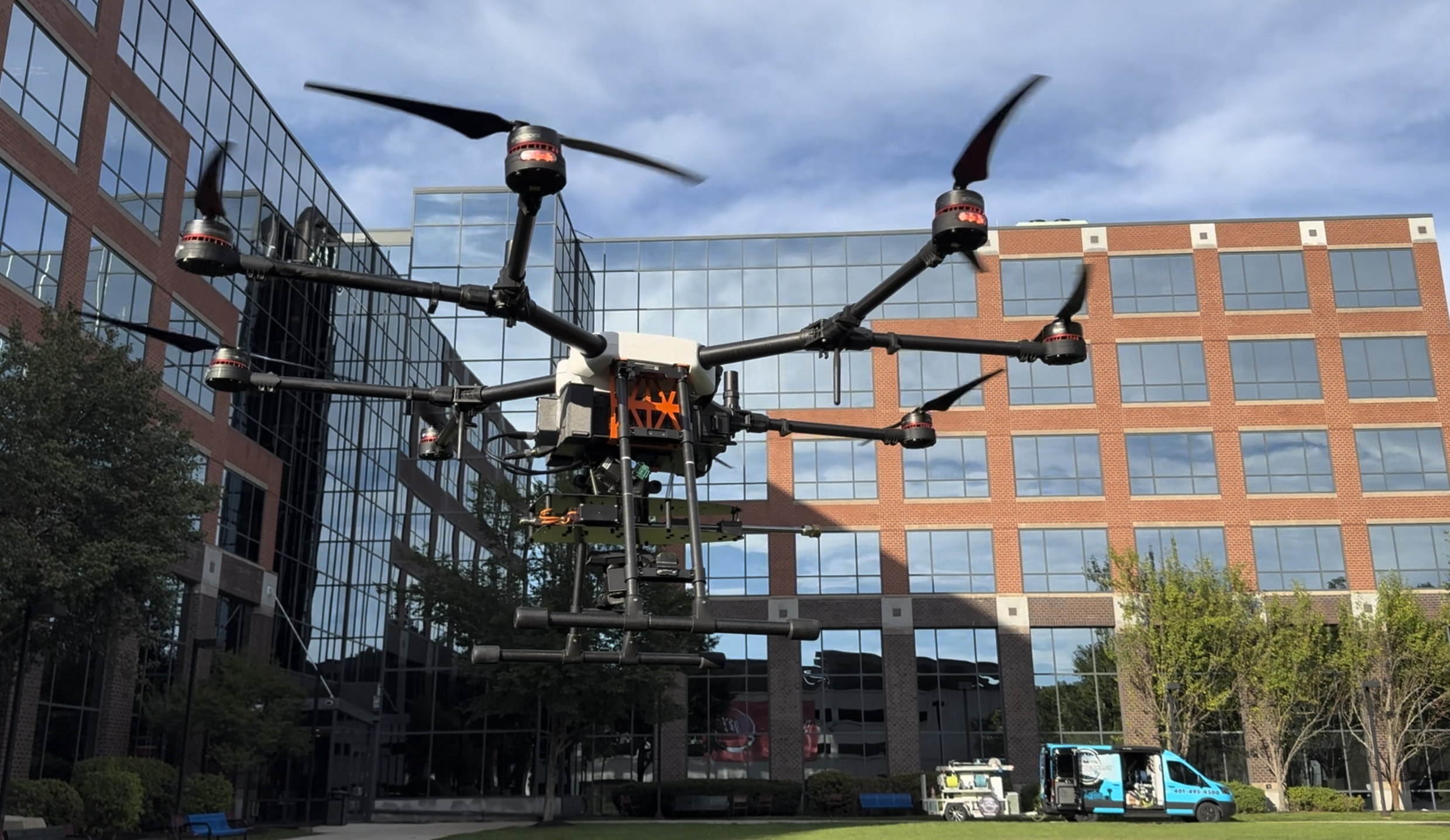
Photo courtesy of AhatTek
Question: Why should I consider starting a drone washing business?
Answer: Drone washing offers one of the strongest returns on investment in exterior cleaning. Most operators get started for under six figures in equipment and routinely generate several hundred thousand dollars in annual revenue, with just a few large projects often paying off the equipment in the first season.
Question: Why should I add a drone to my successful ground-based soft wash business?
Answer: A wash drone lets you safely bid taller, more complex structures without adding lifts, scaffolding, or significant insurance exposure, which can dramatically increase job profitability. You also gain faster setup and turnaround times, so you can complete more work in the same season and keep crews on the ground instead of in the air.
Question: Are drones displacing workers in the industry?
Answer: In most markets drones are filling gaps rather than replacing people as many experienced window and exterior cleaners are aging out and fewer young workers want to hang off buildings. Drone cleaning makes the work more attractive and safer, allowing teams to stay on the ground while still delivering high-quality results for glass and façades.
Question: What are the biggest benefits of drone washing compared to traditional methods?
Answer: The biggest benefits are safety and cost: drones significantly reduce or eliminate the need for scaffolding, lifts, and roof access systems, which lowers rental and maintenance costs and reduces work-at-height risk. Building owners and contractors also see fewer jobsite disruptions and faster project timelines, which means less downtime for tenants and operations.
Question: Many providers say you can learn drone cleaning in a day and get to work. Is that true?
Answer: No. You can study for and pass the FAA Part 107 knowledge test with self-study, but that does not teach you how to fly a cleaning drone or operate the ground equipment safely and effectively. Professional, hands-on training on both the aircraft and the wash system, ideally on real job sites, is essential for safe operations, consistent cleaning results, and long-term business success.
Question: How do you clean glass without physically touching it? Do you only use water agitation?
Answer: Experienced drone washers use chemistry and hydraulics together: soft wash solutions and surfactants break down organic growth and grime while carefully controlled pressure rinses remove dirt, cobwebs, and bird droppings. For glass, deionized or purified water can be used to leave a spot-free finish that closely matches conventional methods, often with faster, safer execution when work is done on a regular maintenance schedule.
Question: Am I too late to get into this sector? Is it already oversaturated?
Answer: No. Commercial drone washing began gaining traction around 2018–2019, and adoption has accelerated as risk managers and facility leaders have seen successful case studies and improved technology. The market is still early, with significant room for growth in commercial, industrial, and institutional facilities that are just now adding drones to their maintenance plans.
Question: Why was the failure rate so high for early adopters, and what has changed?
Answer: Many early operators were sold on “turnkey” promises. Pass Part 107, watch a few videos, buy a drone and a trailer, and you’re in business. They didn’t include real flight and cleaning experience or sales training. This led to safety issues, poor results, and frustrated customers. Today’s successful providers invest in comprehensive training, on-site implementation support, and clear go-to-market guidance; and manufacturers have shifted from one-time sales to long-term partnerships focused on operator safety, profitability, and repeat business.
Question: What drone should I buy?
Answer: Cleaning drones are work tools, so although technology is important, prioritize the partner behind the hardware. Look for a system that offers robust training, responsive support, and ongoing innovation informed by real-world operators. The right platform should integrate smoothly with your soft wash or pressure wash setup, help you work significantly faster and safer than traditional methods, and be backed by a team committed to your long-term success, not just a one-time equipment sale.
For more information, visit www.ahattek.com.
Go Mobile